
Blending factual investigation with dramatised storytelling, Channel 4’s Dirty Business caused a sensation when it explored the long-running pollution crisis in UK water.
Written and directed by Joseph Bullman, the three-part series followed two ordinary citizens uncovering evidence of sewage dumping in rivers, alongside real-life stories of families affected by contaminated water. What unfolded was a tale of systemic failure, where members of the public were trying to establish why regulators and watchdogs were standing by almost helplessly.
The contamination in British waterways and on our coastline is quickly becoming one of the most talked about issues in modern politics. It represents a direct threat to public safety, and the full extent of the problems have yet to reveal themselves. But, it’s not a phenomenon that’s suddenly appeared.
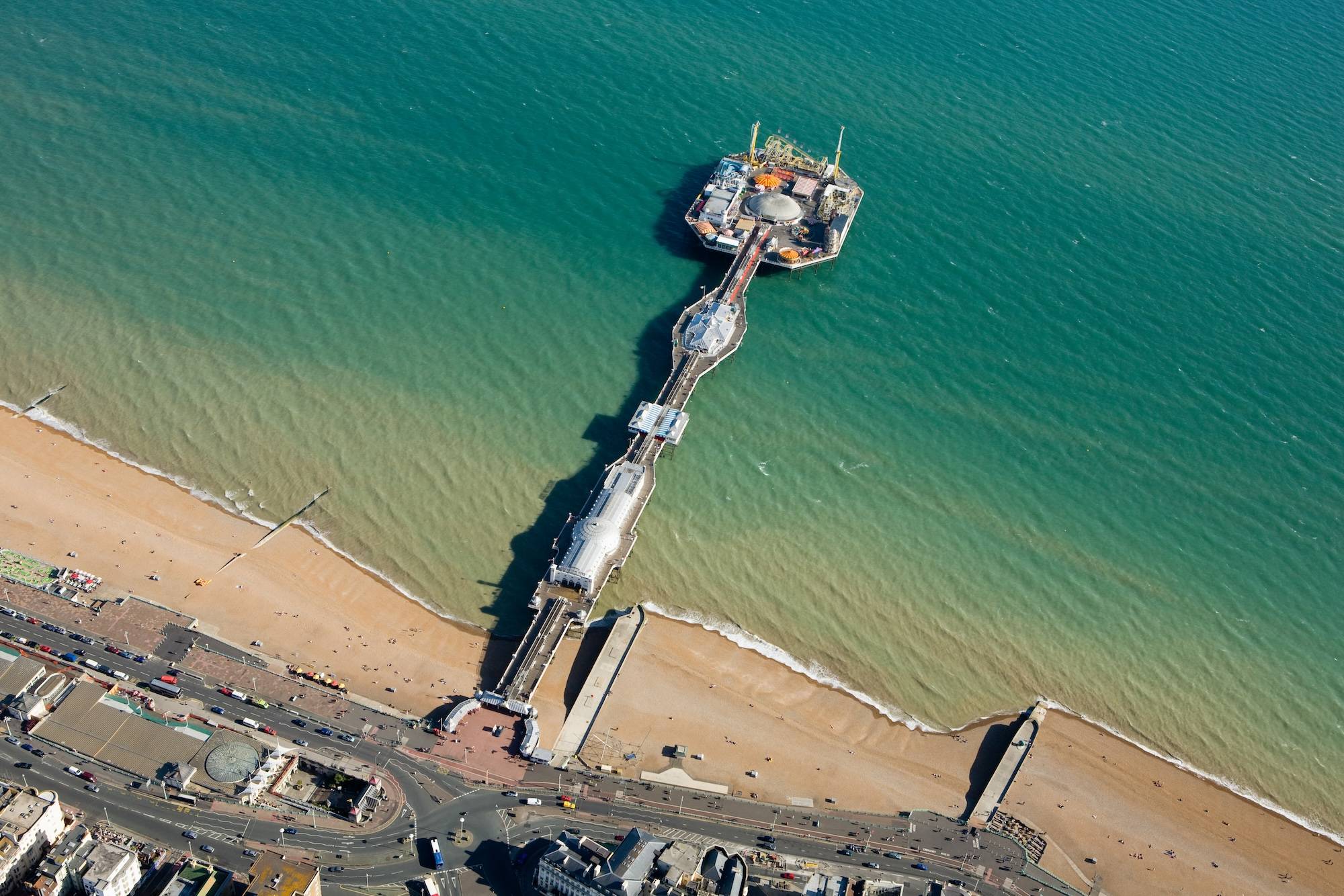
“In the 1980s, whenever there was heavy rain, you’d get raw sewage being discharged down these short sea outfalls all along the Brighton seafront,” Andrew Coleman recalls. “If you were surfing next to one of the piers, there were outfalls near there. You could see it. Sometimes you could taste it.”
Almost involuntarily, he emits a nervous, but knowing, laugh. The kind that comes from reciting the same story for years. Coleman has a background in town planning, but he’s talking to me today in his guise as a long‑time local representative for Surfers Against Sewage (SAS). He’s spent 30 years on the frontline of Britain’s war over what ends up in our rivers and on the beaches. What began, as he puts it, with conversations and protests involving “about ten surfers and one sewage outfall” is now a national scandal.
From the Channel to the Lake District, from city beaches to rural streams, our waters are repeatedly contaminated with a cocktail of human waste, agricultural runoff and industrial pollution. “It just seems like the whole of the country is filthy now,” he adds. “Inland you’ve got farmers’ runoff. On the coast, sewage is still very much an issue.”
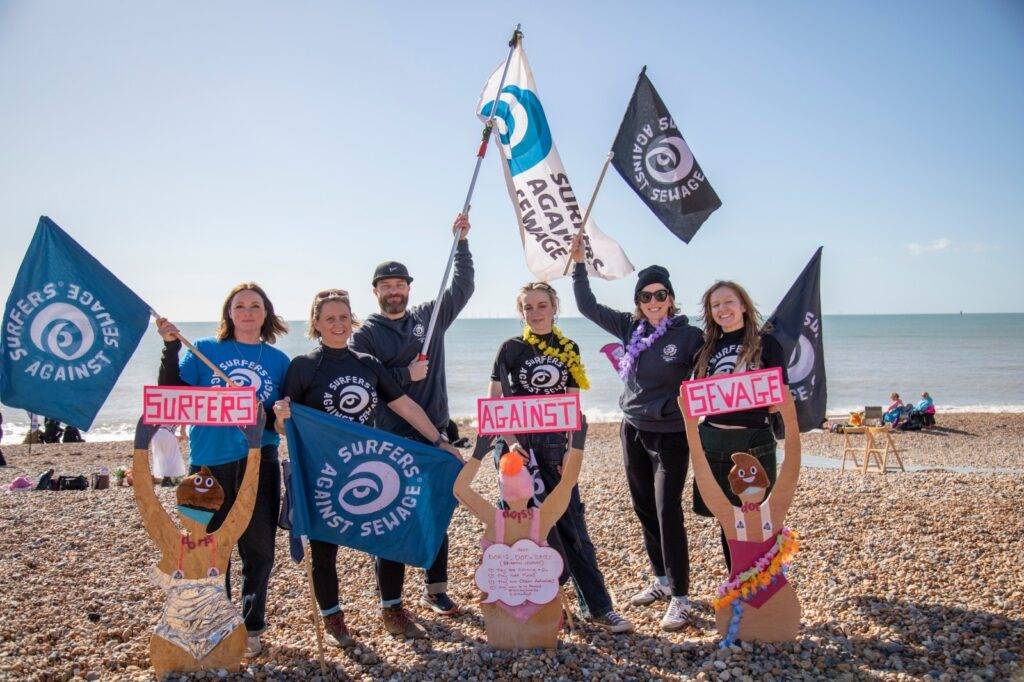
In the early 1990s, a group of Cornish surfers, fed up with getting ill after going in the water, formed Surfers Against Sewage. Coleman’s own experience is similar to thousands of others. He’d read about them in a magazine, and went along to a protest outside Parliament.
From there, thanks to a mixture of clever publicity stunts and tenacity, the small pressure group built national momentum. One of its founders, Chris Hines, had worked on local papers in Devon and Cornwall, so knew what would get into the media. There were surfers in wetsuits with gas masks on, the military‑style branding leaning heavily into the SAS acronym. Local cells sprang up in Wales, the North East and along the south coast. In Brighton, the new activists made an early decision to take their campaign directly to the people who controlled the pipes.
“Through the 1990s we would organise demos at Southern Water’s AGM,” Coleman remembers. “SAS in those days had shares in Southern Water, so we could actually go into the AGMs and ask awkward questions.”
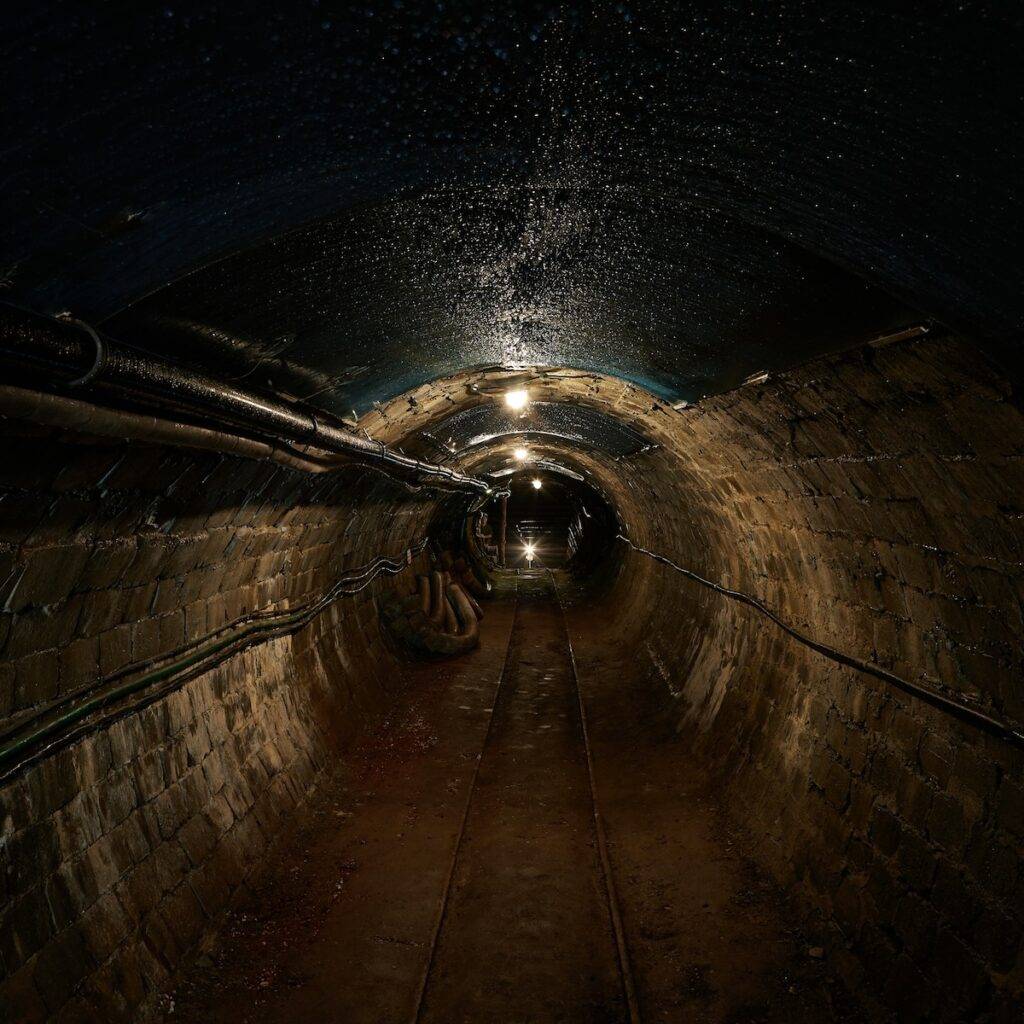
In the 1990s, after intense pressure from groups like SAS, new legislation encouraged major investment in waste water treatment. New sewage plants and new tunnels were built along much of the coast. Brighton & Hove saw the construction of a gigantic storm drain running underneath its iconic shingle beach. But even then, some activists warned that the scale of the new infrastructure was inadequate for a growing population.
In a story that will be familiar to most tons, the city’s sewage used to be sieved and discharged out at sea. At liberty to wash up on beaches along the coast. A wastewater treatment plant was built, meaning waste is no longer habitually dumped.
On paper, it looks like progress. In practice, the picture is more complicated. Untreated sewage is still going out into the Channel when it rains, in a failure to keep up with demand. It’s a toxic mixture of ageing kit and short‑term business decisions.
“The storm tunnel still operates,” Coleman tells me. “But the pumping station at the Marina end doesn’t appear to be working. That’s one of the reasons why, whenever it rains, they’re still pumping untreated sewage through the old outfall.”
He tells me there were 187 hours during which untreated sewage was discharged in 2024 in the Brighton area. “Despite all the investment, something hasn’t been maintained properly,” he says. “Which means our sewage isn’t getting treated.”
Southern Water argues that tidal modelling shows discharges from these pipes do not significantly affect central Brighton’s bathing waters. But, anyone interested can make up their own minds by looking at the data collected on SAS’s Safer Seas & Rivers Service app, which shows which outfalls are in operation and the potential impact.
Stuart Davies from SAS explains to me the heart of the problem in urban areas is how the system relies upon Victorian infrastructure. That allowed for the mixing of “grey water” (from sinks, gutters and surface run-off) with “brown water” (from toilets) in the same network of pipes.
Under normal conditions, that mixture is carried to treatment works and then, via long outfall pipes, discharged offshore. But when heavy rain or urban development overloads the system, water companies face what Davies calls a “Sophie’s choice”.
“When the system backs up, because it doesn’t have sufficient infrastructure and there’s no clear, credible plan, they’ve got two options,” he says. “They press the release on the CSO so it goes out, or they let it come back through people’s toilets. It’s like Sophie’s choice, isn’t it?”
Davies’s journey into campaigning seems familiar. A lifelong surfer, sea swimmer and sailor, he grew up in Saltburn, on England’s north-east coast. The sea was his favourite place. “The water quality there was horrific, mainly through industrial pollution at the time,” he recalls. “It was just something that, at the time, you kind of accepted – ‘oh, the water’s a bit skanky’, you know, we would say.”
Moving south, he discovered that the problem was everywhere. Industrial effluent was less visible, but surfers in places like Brighton and Exeter were still falling ill after going in the water. The source was different – sewage and storm overflows rather than chemical works – but the result for coastal communities was disturbingly familiar.
He joined SAS around 2001, turning up to beach cleans and local actions. Surfing, he jokes, was his “gateway drug into eco activism”.
A turning point came years later, when he heard the story of Heather Preen, a girl who died after contact with sewage-contaminated water. The case was highlighted in the Dirty Business series, which alleges it was caused by a pattern of obfuscation and delay by institutions meant to protect public health.
“They covered it up and they got away with it,” Davies says. “That just made me furious. And that was when I thought, I’m going to be a rep, I want to do something about this. I’m going to roll my sleeves up and get involved.”
“Over time, we’ve seen systematic, 20‑year‑plus underinvestment in infrastructure,” explains Campaign for Rural England Sussex Director, Paul Steedman. “The way the water companies have been owned has created incentives to extract as much shareholder profit from existing infrastructure as possible, without investing enough in upgrading pipes, treatment works and stopping leaks.”
Founded a century ago, CPRE has campaigned against cities sprawling uncontrolled across the countryside, arguing that farmland and green spaces should be protected, and that private profit shouldn’t be the only force deciding what gets built where.
While England has a planning framework, Steedman says it’s partial and fragmented – one of the root causes of this wider crisis. He’s quite brutal in breaking this aspect down. “You’ve got a department over here in government that’s concerned with house building and the planning system,” he says. “A different department over there that’s concerned about water and sewage. Another one dealing with economic growth. They all have their own separate concerns, so they think about their bit in different ways. But things like water, or how we use land, isn’t neatly divided up like that.”
Successive governments have trumpeted ambitious housebuilding targets. Yet underlying infrastructure is still needed to support those homes. Water supply, sewers, treatment works… all have lagged behind.
“You end up building lots of new houses, with lots of new toilets flushing into an infrastructure that isn’t keeping pace. That exacerbates the risk of sewage spills.”
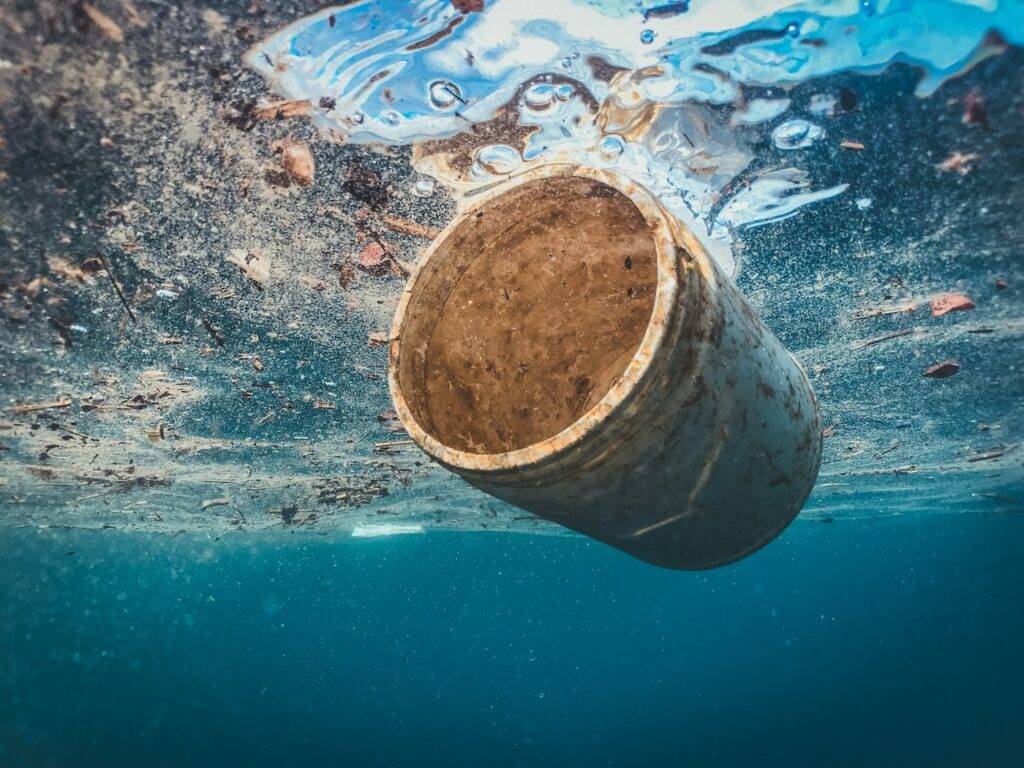
When new estates go up faster than the network beneath them is upgraded, the physics is unforgiving. More wastewater goes into a system already at capacity. When heavy rain comes, or when old pipes are overloaded, treatment plants and storm overflows are used as pressure valves, discharging untreated or partially treated sewage into rivers and the sea.
In polite political discourse, housing and water infrastructure are treated as separate debates. One is about home ownership, rents, planning permissions and aspirations; the other about brown foam on riverbanks, “do not swim” warnings, and people getting ill. Steedman insists that dividing the conversations is a dangerous mistake.
“There’s a very simplistic idea in parts of government, particularly bits that have been nobbled by the development sector, that all you have to do is build more houses,” he says. “Unfortunately, the housing market doesn’t work like that. The connection between simply building more houses and actually getting more affordability isn’t that strong.”
Developers are not in the business of crashing local house prices. Over a million homes already have planning permission but have not been built. Those permissions are held, traded and even speculated on. “The ideal, if you’re a landowner or property agent, is to buy some Greenfield land cheap from a farmer, secure planning permission – which massively increases the value, and then sell that land on at a much higher price,” he says. “There’s a lot of that going on.”
The consequence is perverse. We strain overstretched pipes and treatment plants to accommodate new proposals, in the name of “housing need”, yet leave existing permissions idle and fail to address the structural drivers of unaffordability: land values, weak regulation, and tax rules that discourage downsizing, or better use of the homes we already have.
Water companies don’t operate in a vacuum. Over them sit two main regulators: the Environment Agency, responsible for environmental protection, and Ofwat, the financial regulator. “There’s always been a tension,” Coleman says. “The Environment Agency (EA) wanted more environmental improvements; Ofwat has basically tried to keep water bills down, because that’s politically attractive.”
Different UK governments have had a habit of telling the EA to get off the industry’s back as much as possible, essentially allowing it to self-regulate. “It happened to coincide with a reduction in funding for regulation,” says Coleman. “They didn’t have the resources to do the job, and they were being told they shouldn’t look too closely.” Predictably, we’ve ended up with a regulatory system without teeth, facing large corporations whose primary legal duty is to maximise profits.
For years, this was a largely invisible crisis. Unless you surfed, swam or paddled, the murky reality beyond the shoreline remained easy to ignore. That has changed dramatically in the past decade. The pandemic was an unlikely accelerant. Lockdown, furlough and a series of warm summers drove thousands of people into the sea, rivers and lakes for the first time. Today, surfers are no longer the majority in SAS, it’s swimmers.
“What actually is a water company?” asks Davies. “It is a collection of hedge funds, foreign government owners and shareholders who own a public infrastructure function in a part of a country.” He does not, he insists, blame them for acting in their nature.
The core issue is more complicated than public versus private ownership. But there is a clear argument for more democratic control of utility companies, including public representatives on company boards. If we were to go further down that road, we should have a conversation about why water suppliers need to be profit-making entities. Should every penny they make go to shareholders instead of creating viable systems for the future?
Coleman has spent years watching development plans collide with creaking infrastructure. He tells me that water companies do comment on the local plans councils produce, and on development applications. “They’ll sometimes say, ‘People can’t move into these homes until we’ve upgraded the sewers.’ They get paid connection charges by developers, and then they take water charges from whoever moves into the flats or houses.” What they seem to be failing with is increasing treatment capacity.
“A lot of the public pressure has been very rightly directed at the water companies and the regulators,” Steedman says. “But we also need to remember there are other sectors polluting our rivers.” One of them is farming, particularly around intensive livestock rearing and arable production. These often contribute as much pollution as the water industry.
“In places like Herefordshire, on the River Wye, large numbers of chicken farms have led to huge amounts of chicken manure entering the river,” he suggests. “In some cases, there will be bad-faith actors breaking the law, but a lot of it is that the way we farm is not very ecologically minded.” The incentives for good practice simply don’t exist for an industry dominated by keeping costs low.
In the background are powerful industry lobby groups, who continue to push back against tougher rules, often arguing that stricter standards would mean higher bills, fewer homes or slower economic growth. All this has achieved is weaker provision. Regulators need to be given the resources and powers to carry out robust inspections and enforce the law, otherwise there’s little point in having them.
“It feels like the regulator has been a bit asleep at the wheel,” says Steedman. The government has, under intense public pressure, commissioned a major review of how the water industry is governed. The conclusions were “pretty far-reaching,” Steedman acknowledges, though “not as far as we would like”.
It’s easy, listening to all this, to feel overwhelmed. The problems are structural: privatised utilities, underfunded regulators, powerful lobby groups, climate change, a housing crisis and infrastructure. But no system exists in isolation. So, what can an ordinary person do?
Davies points out how every new driveway is paved over, every garden turned to concrete, every extension that replaces porous soil with tarmac pushes more rainwater into overstretched sewers. He suggests a small, but efficient way of making your mark would be to invest in a water butt. The collection of run-off from your roof, for use in the garden, reduces bills and relieves the drainage system.
In addition, Coleman says your voice is still important. SAS is currently running a petition calling for a radical overhaul of how water companies are run. “What we’re asking for is public and environmental health to be put first,” he explains. “At the moment, that’s not the legal priority for water companies.”
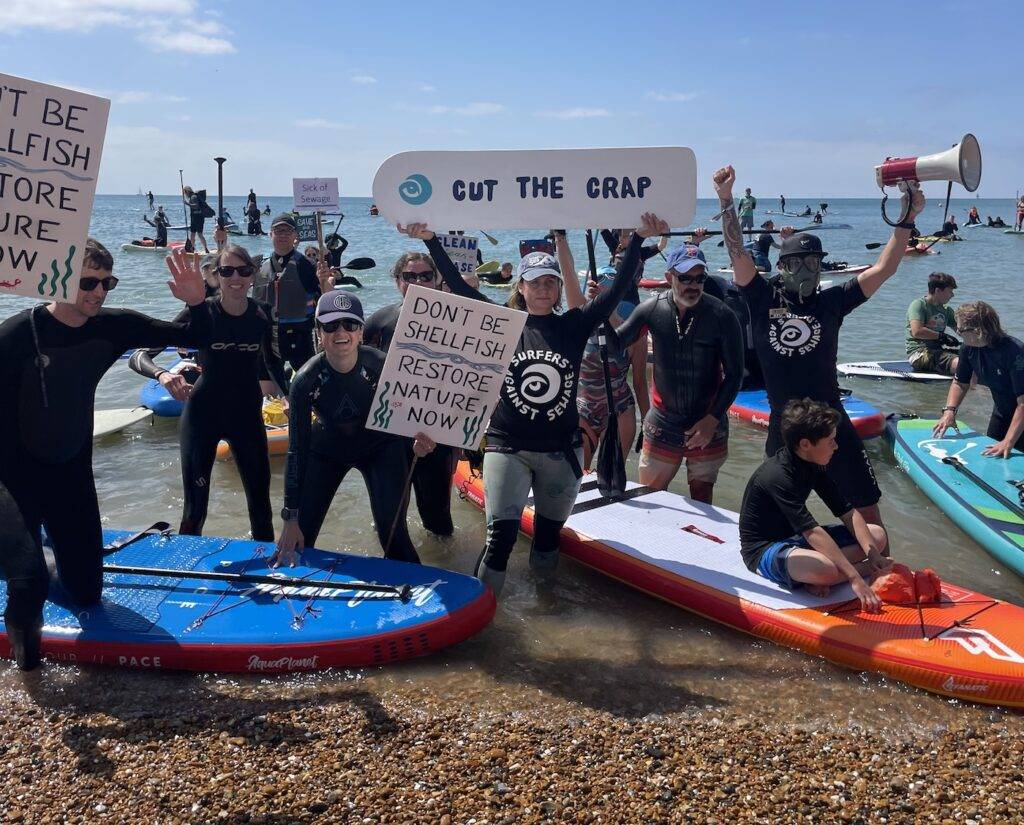
On Sat 16 May, SAS is organising a coordinated series of paddle‑out protests around the country. Brighton’s will take place near the West Pier, with hundreds expected to take to the water. “Protests, petitions, and letters do matter,” Coleman insists. “Politicians are watching.”
“Last year we had something like three to five hundred people,” he adds. “It’s to raise awareness and put pressure on politicians to introduce stronger regulation of the water industry. Put the date in your diary and keep an eye on SAS social media.”
While it is a national issue, we need to find the solutions at a local level. Planning decisions, new developments and regional governance can all shape what happens to your sewage. The introduction of regional mayors could help shape policy, but only if they’re encouraged to take the problem seriously. “In theory, mayors will be responsible for setting out where new homes go with a bit more certainty,” Coleman says. “That should help water companies plan where they need to increase the capacity of their treatment plants.”
Amongst the powers they’ll wield will be an ability to produce Spatial Development Strategies – long-term regional plans for land use, housing and infrastructure. “Planning at that scale is just a much more sensible way to think about issues like water and sewage,” Steedman explains. “There may be all sorts of problems with mayors and how they’re set up, but there is a real opportunity here with the return of regional-scale planning.”
There’s a narrow window in which pushback will be more powerful. There’s reasoned debate around the state of Britain’s water, and if people should be able to still profit from this – it’s higher than it has ever been.
In a country that once prided itself on trout streams and seaside towns, that choice may now be the most important of all. “We’ve allowed this to happen,” Steedman says. “But that means we can choose to stop it happening too.”
The question now is whether that awareness will be translated into law, investment and enforcement, or whether, decades from now, another generation of surfers will be circling another pollution-stained pier, wondering how such a rich country managed to live with such a shameful mess for so long.
That change, if it comes, will not be cheap or neat. It will involve reevaluating incentives for water companies, tightening and enforcing regulations, rethinking how and where we build homes, reforming the economics of land, and reshaping how farming is supported. It will also require citizens who are willing to keep pressing, writing, complaining and voting on the issue long after the headlines have moved on.
“People always ask what they can do,” Coleman says. “Sign the petitions. Use the app. Turn up to protests. Write to your MP. And don’t let anyone tell you this is all inevitable. It isn’t. It’s a choice.”
The Surfers Against Sewage app, which offers the latest pollution forecast compiled from the Environment Agency, NRW and SEPA for 200 locations across the UK, is available on Google Play and App Store.