Something happened to English wine, and it happened largely in Sussex. The same chalk belt that runs beneath the Champagne region of France continues north-west across the Channel and surfaces here, in the South Downs, in the valleys around the Weald, in the long slopes facing south across rolling countryside towards the coast. French winemakers noticed this first. Then one or two bold English families did. Then a generation of producers followed them into the ground, planted their vines, and waited.
The waiting is over. English sparkling wine, and increasingly English still wine, has arrived at a point where the conversation has shifted decisively. These are not charming regional curiosities. They are wines winning global blind tastings, being poured at the Royal Opera House, being listed on the most serious wine lists in the country. The vineyards producing them are, many of them, among the most beautiful places in England, set against Downs landscapes and ancient parkland, with the kind of visitor experiences that make an afternoon into a memory.
The twelve estates that follow are a guide to what the region does best: from the founding pioneers who changed the perception of English wine entirely, to the smaller family operations and the exciting new arrivals whose first vintages are already setting standards. All of them are worth the journey. Several of them offer reasons to stay the night.
Pulborough, West Sussex
Set within the South Downs, Wiston Estate has been in the care of the Goring family since 1743. Its south-facing chalk slopes provide the ideal conditions for producing elegant English sparkling wines, with a focus on purity, balance and expressing the character of the landscape.
Guided by a commitment to responsible land management and sustainable winemaking, Wiston seeks to care for the landscape while producing wines that reflect the character of the South Downs. As members of Sustainable Wines of Great Britain, the estate’s vineyard and winery are accredited for their sustainable practices, reflecting a commitment that extends from vine to bottle. Working closely with the estate ecologist, Wiston is restoring habitats and encouraging biodiversity across the wider estate, with a long-term commitment to caring for the landscape and its wildlife.
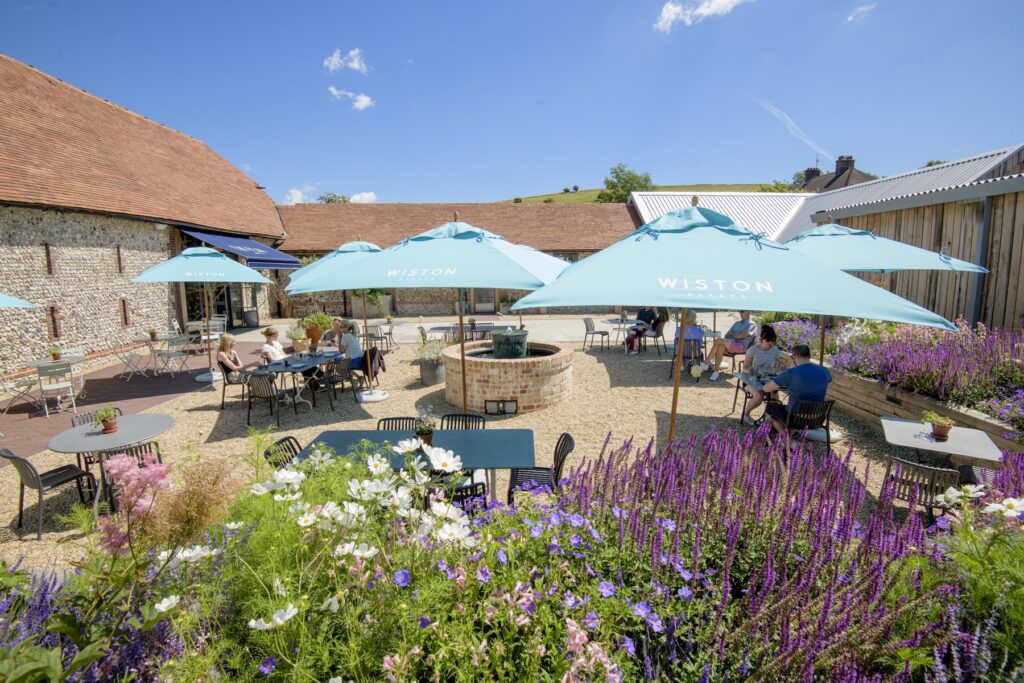
Visitors can explore Wiston through award-winning vineyard tours and tastings, recognised as Experience of the Year at the Beautiful South Awards. At Chalk, Wiston’s restaurant, seasonal menus showcase ingredients from the estate and its neighbours, with a courtyard providing a relaxed setting for coffee, lunch or a glass of sparkling wine. Housed within a restored flint barn, Chalk has retained its place in the MICHELIN Guide 2026, was named Restaurant of the Year at the Beautiful South Awards 2026 and received TripAdvisor’s Best of the Best award in 2025, placing it among the top 1 per cent of restaurants worldwide.
From wine and food to conservation and hospitality, Wiston Estate offers a thoughtful expression of the South Downs. It is a place shaped by generations of stewardship and a desire to share the landscape, its produce and its stories with visitors from near and far.
Visit: Tours run Tuesday to Sunday, with winery tastings, vintage experiences and seasonal vineyard safaris available. Chalk should be booked separately for lunch or dinner.
West Chiltington, West Sussex
There is a strong argument that without Nyetimber, English sparkling wine as we know it today does not exist. The estate itself pre-dates winemaking here by almost a millennium; it appears in the Domesday Book of 1086, making it one of the few wineries anywhere in the world with a recorded history that stretches back to Norman England. But the story that matters began in the late 1980s, when an American couple, Stuart and Sandy Moss, bought the Sussex estate and, in 1988, planted Chardonnay, Pinot Noir and Pinot Meunier with a specific, singular ambition: to produce an English sparkling wine that could stand alongside the best of Champagne.
The gamble paid off spectacularly. The 1993 vintage of Nyetimber’s Classic Cuvée went on to be named Best Sparkling Wine in the World at the International Wine and Spirit Competition. The world, as the saying goes, sat up and took notice. That moment changed everything: it was the proof of concept that a generation of Sussex and Kent winemakers needed.
Today the estate is owned by Dutchman Eric Heerema and guided by head winemaker Cherie Spriggs who, in 2018, became the first winemaker outside Champagne, and the first woman, to be named Sparkling Winemaker of the Year at the International Wine and Spirit Competition, a title she won again in 2025. Nyetimber is only open to visitors on selected open days, which begin with a welcome in the White Barn before a guided walking tour through some of the oldest vines in England, finishing with a guided tasting of the estate’s celebrated range. Book early. Places go quickly, and rightly so.
Ditchling, East Sussex
Ten miles from Brighton, overlooking the South Downs near the village of Ditchling, Ridgeview was founded in 1995 by IT entrepreneur Mike Roberts MBE and his wife Chris. The Roberts family brought the rigour of a different industry to viticulture: a commitment to quality control, to the detail of the process, to not releasing a wine before it is ready. That approach produced a result that confirmed what the English wine industry had been quietly saying to itself: in 2010, the Ridgeview Blanc de Blancs 2006 won Decanter’s international trophy for the world’s best sparkling wine.
The accolade was significant not only for Ridgeview but for the entire region. For a single-estate Sussex wine to beat every Champagne house and every competing sparkling producer in the world is a story that circulated well beyond the wine press, and it brought serious international attention to what Sussex was producing. Today, Ridgeview exports to thirteen countries and holds over 250 medals from competitions around the world. It is also the only English sparkling wine poured at the Royal Opera House, a detail that says something about both the quality of the wine and the seriousness with which English production is now regarded.
Visitors can tour the vineyards and state-of-the-art winery with guided tastings of the range, accompanied by the sweeping South Downs views that provide the backdrop to everything produced here. Through the warmer months, the on-site restaurant, The Rows & Vine, brings the estate’s aesthetic together: seasonal dishes, vineyard views, the kind of long lunch that requires no particular justification beyond the quality of what is in the glass.
Ditchling, East Sussex
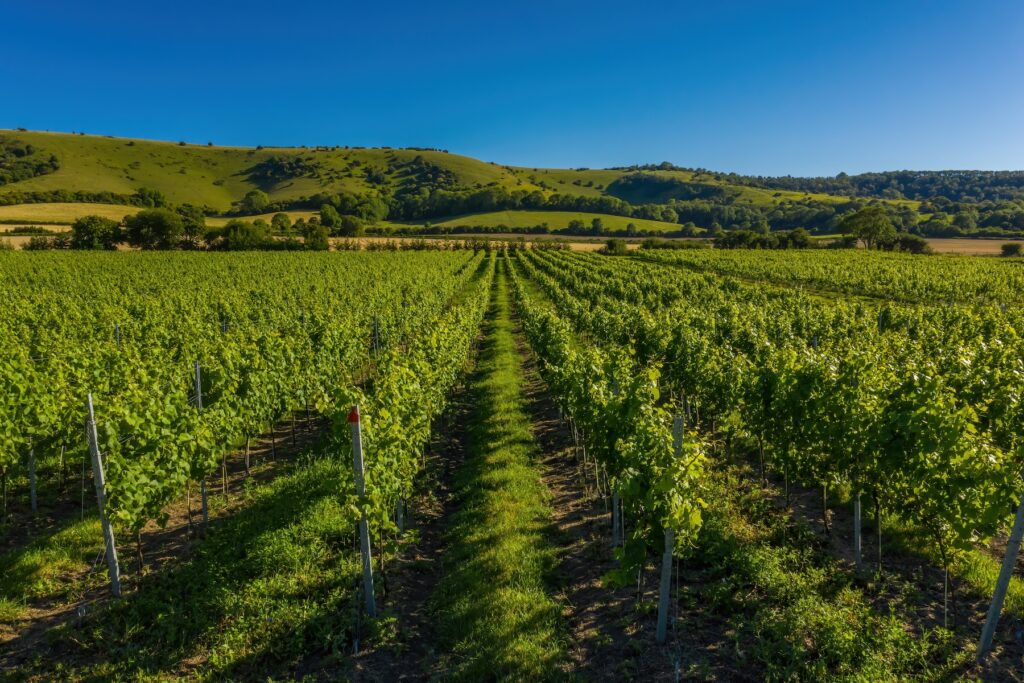
Named after the six martlets on the Sussex county crest, heraldic birds said never to land, Everflyht is one of the most quietly radical producers in the county, and proof that the new generation of Sussex winemaking is thinking about far more than what ends up in the glass. Established in 2016 by the Ellis family at the foot of Ditchling Beacon, in the heart of the South Downs National Park, the single-estate vineyard has pioneered regenerative viticulture from the outset: 3.5 hectares of the estate are set aside for biodiversity, with over 400 trees, wildflower meadows and 800 metres of hedgerow planted around the vines.
The wines follow the same philosophy. Made from the classic trio of Pinot Noir, Pinot Meunier and Chardonnay with low-intervention winemaking, Everflyht’s sparkling wines are contemporary and precise, marked by fine, persistent bubbles and a lovely clarity of fruit.
Visits are kept deliberately intimate. Tours run on Saturdays at 1.30pm through the growing season, from early April to October, and are limited to 20 guests: a 45-minute guided walk through the vines, followed by a tasting of three sparkling wines served with charcuterie and cheeses in the tasting room. For those who like their fizz with a side of birdsong and a clean conscience, this is the stop.
Bolney, West Sussex
Bolney has a claim that no other entry on this list can make: it is one of England’s oldest vineyards, established in 1972, when the first vines were planted in this corner of West Sussex. More than fifty years of cultivation gives the estate a depth of accumulated knowledge that newer producers are still working towards, and it shows in the wines, which span both sparkling and still at a time when many Sussex estates remain focused exclusively on fizz.
This is Bolney’s particular distinction. While the English wine renaissance has been led by sparkling wines, Bolney has maintained a serious commitment to still wines throughout, producing Pinot Noir, Pinot Gris, and a Bacchus that regularly outperforms expectations for the variety. The estate’s Blanc de Blancs took Gold Outstanding at the IWSC and the estate has been named UK Wine Producer of the Year, but the conversation here encompasses more than bubbles.
Under an hour from central London by train to nearby Haywards Heath, and close to Gatwick, Bolney is also among the most accessible estates on this list, which makes its warm, well-organised visitor experience all the more valuable. The Eighteen Acre Restaurant overlooks the vines and offers a seasonal menu built around local produce; the adjacent café handles lighter appetites and walk-ins. Tours are guided and bookable, combining vineyard exploration with private tastings paired with local cheese and charcuterie. For first-time visitors to a Sussex vineyard, Bolney is an excellent introduction: deep in quality and history, relaxed in atmosphere, genuinely welcoming.
Pulborough, West Sussex
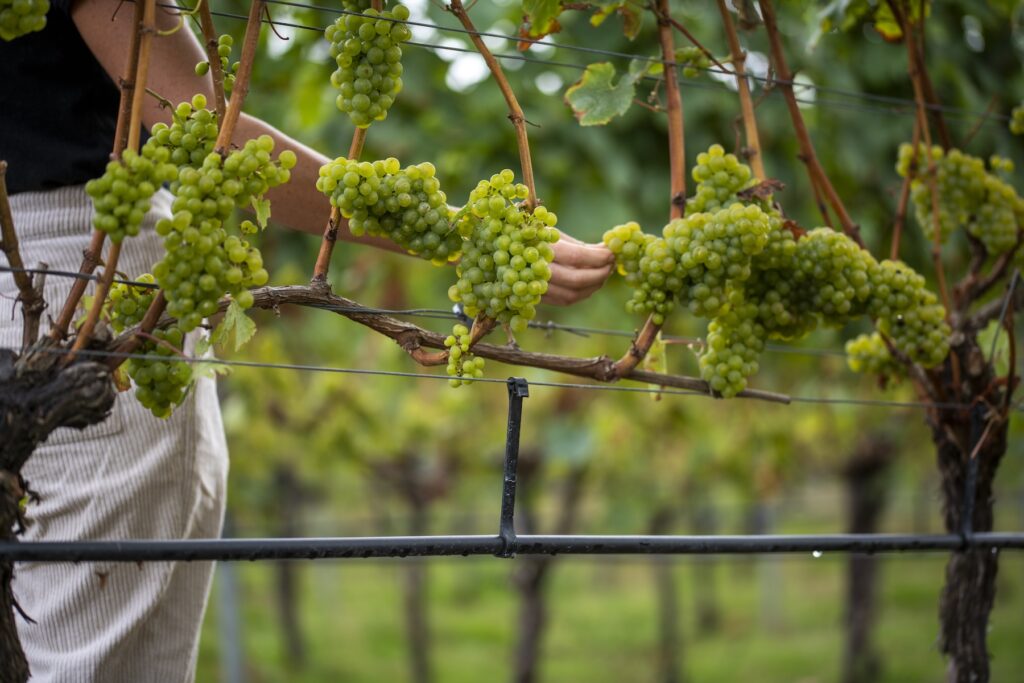
In a landscape where sparkling wine dominates the conversation, Stopham Estate has made a quiet but emphatic case for still. When Simon Woodhead, a former designer of automotive sensors for the TAG McLaren Formula 1 team, planted 21,000 vines across six hectares of West Sussex in 2007, he chose varieties not typically associated with the English wine revival: Pinot Gris, Pinot Blanc, Auxerrois and Bacchus, aromatic cool-climate whites that have become, in Stopham’s hands, some of the most distinctive wines produced in the south of England.
The estate sits within the South Downs National Park near Pulborough, beside the River Arun, a setting of particular English beauty: river meadows, ancient hedgerows, the long views that characterise this less-visited part of West Sussex. All grapes are grown on site; the winery uses only estate fruit, which gives the wines a coherence and a sense of place that stands apart from producers working with broader sourcing. Decanter described the estate’s Pinot Blanc as “the essence of summer, with aromatic summer meadow scents alongside a touch of steely minerality”. It is a fair description of what Stopham does with its best material: captures the quality of the English landscape in a glass.
The award record, at the IEWA, WineGB and the Decanter World Wine Awards, reflects the critical consensus that these wines punch well above their modest profile. Stopham is the vineyard for the serious wine enthusiast who wants to explore what England’s still wine offer genuinely looks like when it is done with precision and care. Tours and tastings are available with the winemaking team: private, knowledgeable, and appropriately focused on the detail of what makes this site exceptional.
Chichester, West Sussex
There is an argument to be made that Tinwood Estate represents English sparkling wine at its most honest: a single-vineyard producer, using the traditional method, making wines exclusively from grapes grown on the estate’s own land near Chichester at the foot of the South Downs National Park. No blending across multiple sites, no sourcing from elsewhere. What the soil and the vintage give, the wines express. It is a rigorous approach, and the results show why.
The estate was established in 2007 by the Tukker family, who recognised in this particular corner of West Sussex, with its chalk-flint soils and its south-facing slopes sheltered by the Downs, the conditions that serious sparkling wine requires. The vines are now mature enough to produce wines of genuine complexity, and the estate’s range has been building a reputation for the kind of single-vineyard quality that defines the premium tier of English sparkling wine.
What distinguishes the Tinwood experience as much as the wine is the sense of scale and intimacy it preserves. The tasting room opens onto a spacious patio with direct vineyard views, and tours are led by a knowledgeable member of the team through vineyards where sustainable farming practices are embedded in the routine rather than the marketing. Eight luxury vineyard lodges sit on the edge of the vines, each with a private terrace and views across the estate, making Tinwood among the very few places in the South East where you can spend the night within a working vineyard, open a bottle of the estate’s own sparkling wine, and watch the sun go down over the South Downs from the kind of quiet that the rest of life rarely provides.
Albourne, near Hassocks, West Sussex
Eight miles from Brighton, just below the South Downs, Albourne Estate arrived in 2010 and has moved quickly. Founded by husband and wife team Alison Nightingale and Nick Cooper as a family-owned boutique vineyard, it established itself with remarkable speed, winning UK Wine of the Year for its Bacchus in 2015, from only its second ever harvest, and continuing to produce wines that sit comfortably alongside estates with decades more experience.
What distinguishes Albourne is partly the wines and partly the principles behind them. The estate runs on 100 per cent green energy, in part from its own solar panels, and employs a farming approach that treats sustainability as a practical standard rather than an aspiration. The wines themselves reflect the care: precise, characterful, with the aromatic quality of chalk-grown fruit expressed across both sparkling and still varieties.
The estate’s tasting room is open Friday to Sunday from early April to the end of September, with wine tastings accompanied by local cheese and charcuterie platters, self-guided vineyard walks, and pre-booked guided tours that go into the detail of how this particular landscape shapes what ends up in the bottle. The setting, a working boutique vineyard with views up to the Downs, has a beauty that feels unforced, and the scale of the operation means the visitor experience is genuinely personal rather than processed. For those who want to spend an unhurried weekend afternoon somewhere that rewards attention, Albourne is exactly the kind of discovery worth making.
East Grinstead, West Sussex
Kingscote Estate encompasses 150 acres of quintessential Sussex countryside near East Grinstead, with 67 of those acres given over to vines, a scale that puts it among the larger family-run estates in the region. The planting covers both sparkling varieties (Chardonnay, Pinot Noir, Pinot Meunier) and still (Bacchus, Regent, Pinot Blanc), and the wines produced across that range have earned the estate an award record that speaks to the quality of this particular site.
What Kingscote offers in addition to its wines is one of the more complete visitor experiences in the South East. Tours and tastings run from April to October, with options for lunch or afternoon tea to follow, taken either in the converted estate buildings or, in good weather, with the vineyard as backdrop. The estate’s 15th-century Tithe Barn serves as both event space and gathering point: a building that has been at the centre of this land’s working life for six centuries and remains, in its own unhurried way, the heart of the property.
There is also, and this is a detail that visitors tend to mention with particular affection, the Bluebell Railway, which runs close to the estate boundary. On certain days, the sound of a steam locomotive carries across the vines. It is an addition nobody planned for and nobody minds: a very English accompaniment to a very English afternoon, sitting with a glass of sparkling Kingscote while the past travels past on its own timetable. The fishing lakes on the estate extend the visit further still, for those who want to turn a wine tour into a full day in the Sussex countryside.
Haywards Heath, Sussex
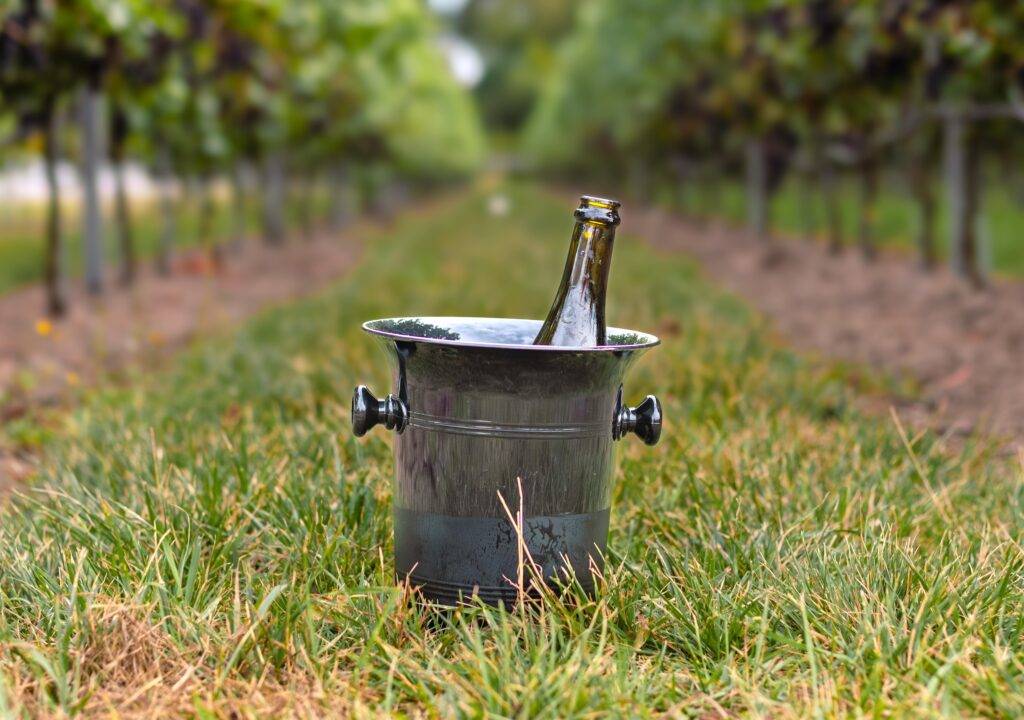
Dermot Sugrue made his name crafting Wiston’s wines before striking out with his own label, and Sugrue South Downs has since become one of the most admired names in English sparkling wine. The wines are made in small quantities, fermented in old oak barrels and typically aged for five to ten years before release, and the results speak for themselves: in summer 2025 the 2009 vintage of The Trouble With Dreams won Best in Show at the Decanter World Wine Awards, the first time a sparkling wine in a magnum from any region has been named among the top 50 wines in the world. Visits are suitably intimate. Guided tours of Bee Tree Vineyard and the winery run at 11am and 2.30pm on Thursdays, Fridays and Saturdays, lasting two hours and finishing with a tutored tasting of sparkling and still wines, at £55 per person. On the last Friday of each month, Winemaker Tastings from 5pm to 7pm add a walking tour, the chance to taste young wines with Dermot or Ana, and Sussex cheese and charcuterie, with numbers capped at twelve. Book early and feel smug.
Visit: Tours run at 11am and 2.30pm on Thursdays, Fridays and Saturdays, lasting around two hours and including five wines with a small cheese and charcuterie tasting, at £55 per person. Summer 2026 tours are currently fully booked, and the winery closes during September and October for harvest.
www.sugruesouthdowns.com
Streat, East Sussex
Artelium arrived in the English wine conversation relatively recently, but it has arrived with considerable intent. Founded by Julie Bretland and Mark Collins, the estate farms two vineyard sites in Sussex across 65 acres, with more than 125,000 vines planted, including the flagship Madehurst Vineyard, a 45-acre chalk-rich site within the South Downs National Park where planting began in 2019 and the first vintage followed in 2022.
That first vintage set a high standard immediately. Wine Enthusiast’s Christina Pickard described the Curators Cuvée as “English fizz at its finest”. Matthew Jukes named the Makers Rosé his structured rosé of the year. The WineGB Awards judged Artelium to have the highest average score in the South East region. For an estate so early in its commercial life, the critical reception has been remarkably consistent, and it reflects the quality of both the site and the winemaking decisions being made here.
Artelium was named in the Walpole Brands of Tomorrow class of 2026, a recognition of luxury brands judged to be building something significant, and the estate’s aesthetic reflects that ambition: considered, intelligent, with a sense that each element of what is produced here is the result of thought rather than habit. Still and sparkling wines are both represented in the range, with Chardonnay, Pinot Noir, Pinot Meunier and Pinot Gris across the vineyard sites. The estate welcomes visitors to its beautiful setting in the East Sussex countryside: a producer worth watching at every stage of its next chapter, and the kind of discovery that wine enthusiasts will be making for years.
Bodiam, East Sussex
Oastbrook sits at the meeting point of Sussex and Kent, on the edge of the Rother Valley near the medieval marvel of Bodiam Castle, and it operates in a register slightly different from anything else on this list. Run by winemakers America and Nick, the estate has acquired, in a short time and through the quality of both its wines and its visitor experience, what might fairly be called cult status. Condé Nast Traveller and The Week UK have both named it among the best vineyards in England. The awards mount steadily. The people who visit tend to return.
The touring experience here runs to around two hours and is shaped around the fact that you are being hosted by the people who actually make the wine. America and Nick lead each session themselves: through the vineyards and their different grape varieties, into the winery and its processes, and finally to a tasting of four award-winning wines with a serious cheese platter and the kind of conversation that happens when your guides have a genuine emotional investment in what you’re tasting. For novices and enthusiasts alike, this is the format that makes a tasting memorable rather than merely pleasant.
The estate also offers accommodation of genuine character: a Round Door Vineyard Cottage, a Halfling Hollow, a lakeside Avalon Lodge, and luxury glamping among the vines. Spending a night here, wine in hand, surrounded by the quiet of the East Sussex countryside, with Bodiam Castle no more than a field away, is an experience that sits outside the ordinary calendar entirely. Oastbrook is the kind of place you discover and immediately want to tell people about, which, one suspects, is exactly how its reputation has been built.
The Sussex vineyard season runs broadly from spring through to autumn, with most estates offering tours from April or May through October. Several, including Bolney, Wiston and Ridgeview, welcome visitors year-round, though summer and early autumn bring the warmest conditions and the fullest visitor programmes.
Almost all estates require advance booking, particularly at weekends and during the summer months when demand consistently outpaces availability. Where overnight stays are offered, Tinwood’s vineyard lodges and Oastbrook’s varied accommodation being the most distinctive, these book out quickly and are worth planning around rather than adding as an afterthought.
A single day can realistically take in two estates, particularly those in geographic clusters: Ridgeview, Everflyht, Albourne and Bolney sit close together in mid-Sussex; Wiston and Stopham are within easy reach of one another in the west of the county; Oastbrook and Artelium anchor the east. For those who want to make a weekend of it, the region’s wider offer, the South Downs, the Sussex coast, the market towns of Lewes and Arundel, gives ample reason to linger. The vineyards are the starting point, not the entire story.