
There was a time, not long ago, when buying an electric car felt like joining a slightly anxious science experiment. You needed a driveway, three apps, a saintly level of patience and the ability to discuss kilowatts at dinner without losing friends.
That moment has largely passed. Electric cars are no longer just silent status symbols for early adopters. They are now city runabouts, school-run SUVs, company cars, long-distance cruisers and, increasingly, the sensible choice for people who do not want to spend their life at petrol stations wondering why a motorway sandwich costs £7.
The numbers tell their own story. The UK now has well over 119,000 public EV chargers, including more than 27,000 rapid or ultra-rapid chargers rated at 50kW or above. By the end of May 2026, Zapmap counted more than 121,000 public chargers across the UK. London remains the best-served region by sheer density, while Brighton & Hove is in the middle of one of the most ambitious on-street charging rollouts in the country, with thousands of lamppost chargers planned across the city.
In other words, the question is no longer “can I live with an electric car?” It is “which electric car actually fits my life?”
The most interesting shift in 2026 is happening at the cheaper end of the market. For years, affordable EVs came with a whiff of compromise: short range, drab cabins, tiny boots and all the glamour of a council pool car. That is changing quickly.
The Dacia Spring remains one of the simplest ways into electric motoring. Prices for the latest versions sit around the mid-teens, depending on trim and offers, and while it will not impress the neighbours in Hove Park or glide silently to Verbier, it makes total sense as a Brighton, Lewes, Worthing or south London runabout. Its official combined WLTP range has previously been around 140 miles, with stronger urban range, which is exactly the point. This is not a car for someone who regularly thunders up the M1. It is for school runs, station runs, supermarket runs and those daily journeys that rarely get anywhere near 50 miles.
Citroën’s ë-C3 is another important arrival because it brings proper small-car comfort to the affordable EV space. It feels less like a novelty purchase and more like a normal hatchback that happens to be electric. That matters. Most people do not want their car to announce a new technological age every time they open the door. They want it to work, fit the shopping, carry the kids and not require a YouTube tutorial to turn on the heater.
Then there is the Renault 5 E-Tech, arguably the small EV with the most personality on sale. Renault has managed to lean into nostalgia without making the car look like a fancy toaster. The cheaper 40kWh version starts from just over £21,000 after grant support, while the larger 52kWh car can offer up to around 250 miles of official WLTP range depending on specification. It is stylish enough for the North Laine, compact enough for London parking and useful enough for real life.
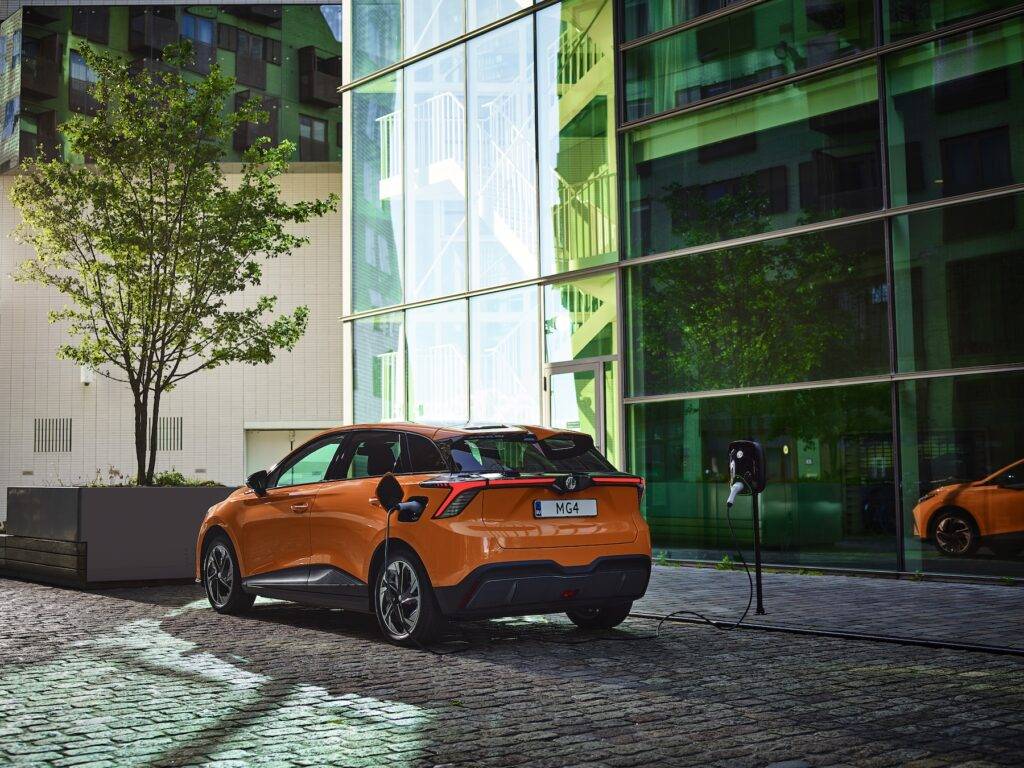
For buyers who want value but need more space, the MG4 remains a strong shout. MG has become one of the brands that quietly changed the UK EV conversation, largely by selling cars that look decent, drive well and do not require luxury-SUV money. Expect entry MG4 pricing from the mid-£20,000s, with official range typically around 200 miles on smaller-battery cars and more on longer-range versions.
BYD is also now impossible to ignore. The Dolphin Surf arrived as BYD’s most affordable UK model, priced from under £19,000 at launch, while the larger Dolphin and Atto 3 give buyers alternatives to the familiar European and Korean names. The brand still has to win over drivers who have never considered a Chinese car before, but on battery technology, equipment and value, it is already forcing everyone else to sharpen their pencils.
For many households in Sussex, Surrey, Kent and London, the real EV battleground is not the cheapest car. It is the family car: something with a proper boot, enough range for weekends away, and the ability to charge quickly when the children have already started asking whether you are nearly there.
This is where cars such as the Hyundai Ioniq 5, Kia EV3, Skoda Elroq, Tesla Model Y, Volkswagen ID.4 and Volvo EX30 sit. They are not cheap in the old sense, but compared with where EV pricing was five years ago, they are far more convincing.
The Hyundai Ioniq 5 remains one of the best examples of how far the sector has moved. It looks like a concept car that escaped a motor show, but its clever bit is not the styling. It uses 800V charging technology, which means that on a powerful enough ultra-rapid charger, a 10 to 80 per cent top-up can take as little as 18 minutes. That is no longer “go for lunch” charging. That is “coffee, loo, messages, back on the road” charging.
The Tesla Model Y still deserves attention, even if Tesla no longer has the EV market to itself. It is roomy, efficient, easy to live with and backed by one of the most straightforward charging ecosystems around. The latest Standard and Long Range variants give buyers a spread from roughly low-£40,000s upwards, with official range figures that can sit above 300 miles. For drivers regularly moving between Brighton, London, the Cotswolds and the South Coast, it remains a very easy car to recommend — provided you are happy with Tesla’s screen-heavy interior and minimalist approach.
Volvo’s EX30 is another interesting one. It brings design credibility and rapid performance in a compact package, making it ideal for urban buyers who want something premium without driving a full-size electric SUV. The catch is space: it is more chic city crossover than large family wagon.
Skoda’s newer electric models are worth watching because Skoda does something many premium brands forget: it builds cars around real families. If you care more about boot space, clear controls and sensible running costs than ambient lighting and brand theatre, Skoda’s EVs make a lot of sense.
At the upper end, electric cars have stopped apologising for themselves. The Porsche Taycan helped prove that an EV could be genuinely desirable to drive. The newer Porsche Macan Electric brings that logic into the SUV world, with high-end performance, long-distance refinement and the badge appeal that still makes a certain kind of buyer go weak at the knees.
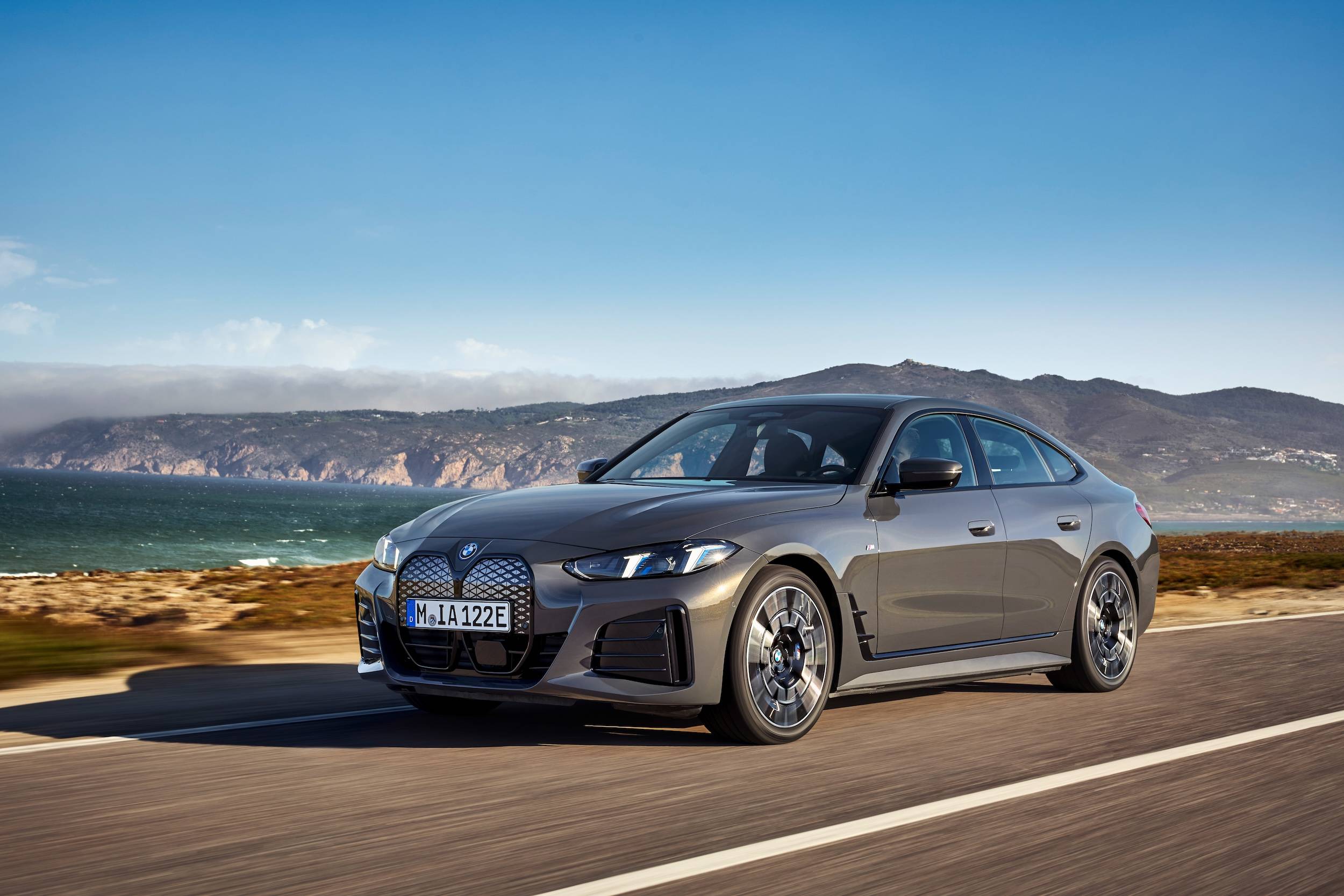
BMW’s i4 is one of the more convincing premium electric saloons because it feels like a BMW first and an EV second. That sounds obvious, but plenty of early electric cars felt as if they had been designed by software teams and then reluctantly given seats. The i4 gives you strong range, fast charging and the familiar low-slung driving position of a proper grand tourer. Prices now run from just over £50,000 to well over £70,000 depending on version.
Mercedes, Audi and Polestar all have strong contenders too, while Range Rover’s full electric models are starting to make the luxury end of the market more interesting. The broader point is that electric luxury no longer means novelty. It means quietness, instant torque, fewer mechanical vibrations and the rather addictive feeling of leaving a junction without drama or noise.
The only warning is depreciation. Some expensive EVs have fallen sharply on the used market, partly because battery technology, discounts and new model launches move quickly. That is painful for first owners but good news for second-hand buyers. A used Porsche Taycan, Jaguar I-Pace, Audi e-tron or BMW iX can now look far more attainable than its original list price suggested.
The biggest myth about EVs is that charging is like filling up with petrol. It is not. It is better in some situations and worse in others.
If you have a driveway or a dedicated parking space, home charging is the great EV cheat code. A 7kW home wallbox will typically charge many EVs overnight. A smaller city car might be full in five or six hours; a large long-range SUV might take ten to thirteen hours from very low to full. But in real life, you rarely arrive home at zero per cent. Most drivers simply plug in two or three times a week, or every night if they like the reassurance.
If you do not have off-street parking, the picture has improved dramatically. London has pushed hard on lamppost and residential chargers. Brighton & Hove is now following with a major lamppost charging programme, which is particularly important in a city full of flats, terraces and streets where “private driveway” sounds like something from a property supplement.
Public charging now falls into three broad habits.
Slow and standard on-street charging is for overnight or long-stay parking. Think residential streets, lampposts and car parks. You plug in, go home, sleep, and return to a healthier battery.
Fast destination charging is for shopping centres, hotels, restaurants, gyms and office car parks. This is useful when the car is parked anyway. A couple of hours might add enough range for several days of local driving.
Rapid and ultra-rapid charging is for longer journeys. A modern EV on a 150kW or 350kW charger can often go from 10 to 80 per cent in roughly 18 to 35 minutes, depending on the car, battery temperature and charger speed. That 10 to 80 per cent figure matters because charging slows down above 80 per cent to protect the battery. On a long journey, it is usually quicker to do shorter rapid stops than sit waiting for the final 20 per cent.
The practical rule is simple: charge where the car naturally waits. At home, near home, at work, at the supermarket, at a hotel, or during a proper motorway pause. EV life becomes annoying only when people try to use public rapid chargers like petrol pumps every time.
Official WLTP range is useful for comparing cars, but it is not a promise from the motoring gods. In normal mixed driving, expect many EVs to deliver roughly 75 to 90 per cent of their official figure, depending on weather, speed, tyres and how aggressively you drive.
A small city EV with a 140-mile official range may feel like a 100 to 120-mile car in mixed use. That is still more than enough for most daily driving. A family EV with a 300-mile official range may realistically give 230 to 270 miles on a long trip. A premium long-range model may push beyond that, especially in mild weather.
Motorways are the range killer. EVs are at their best in town, where regenerative braking recovers energy and speeds are lower. At 70mph on a cold wet night with heating, headlights and wipers working, range drops. This is not a scandal; it is physics. Petrol and diesel cars also use more fuel in poor conditions, but drivers notice it less because filling up is familiar.
For a South East driver, the practical question is not whether an EV can do Brighton to London. Almost any modern EV can. Brighton to central London and back is roughly 110 to 130 miles depending on the route. The more relevant question is whether you can do Brighton to Cornwall, London to the Lake District, or Sussex to the Alps without planning. The answer is yes, but you plan differently: you stop where the chargers are good, not where the petrol station has the least depressing sandwich selection.
The South East is now one of the easiest places in the country to shop for an electric car because nearly every mainstream franchise group has EV stock, and many brands now offer online ordering with local handover.
Around Brighton and Sussex, start with the main dealer corridors in Brighton & Hove, Portslade, Worthing, Crawley, Eastbourne and Gatwick. MG, Hyundai, Kia, Renault, Nissan, Volkswagen, BMW and Mercedes all have strong EV ranges and established dealer support across Sussex and the wider South East. Crawley and Gatwick are particularly useful if you want to compare multiple brands in one trip.
London is even denser. West London and south-west London are especially strong for EV retail, with brand stores, multi-franchise groups and newer entrants such as BYD. BYD has retail presence in areas including West London, Croydon and Thames Ditton, while Tesla continues to operate through its direct-sales model, with test drives booked online rather than through a traditional dealership. Polestar also leans heavily into a direct, design-led retail approach.
For premium buyers, London, Guildford, Gatwick, Tonbridge, Maidstone and the M25 belt offer easy access to BMW, Mercedes-Benz, Porsche, Audi, Volvo and Jaguar Land Rover retailers. For nearly-new bargains, look at approved-used stock as well as Auto Trader, Cinch, Cazoo-style online retailers and local specialists. The used EV market is now much more interesting than it was, particularly for buyers who want a £60,000 car for closer to £30,000.
The best advice is to test drive at least two very different EVs before buying. Try a budget car and a family SUV. Try a Tesla and a non-Tesla. Try one car with physical buttons and one controlled almost entirely through a screen. The biggest differences are not always range or power; they are visibility, software, boot shape, charging speed and whether the interior annoys you after ten minutes.
For tight budgets, look at the Dacia Spring, Citroën ë-C3, BYD Dolphin Surf and Renault 5 E-Tech. They make the most sense for urban and suburban life, especially if most journeys are short and parking is tight.
For value family motoring, look at the MG4, Kia EV3, Skoda Elroq, Hyundai Kona Electric and Volkswagen ID.3 or ID.4. These are the cars that will quietly convert people who do not care about being early adopters.
For design-led buyers, shortlist the Renault 5, Volvo EX30, Hyundai Ioniq 5 and Polestar 2. They all bring a bit of style without becoming ridiculous.
For long-distance drivers, the Tesla Model Y, Hyundai Ioniq 5, Kia EV6, BMW i4 and Mercedes EQE are worth serious consideration. Look closely at rapid charging speed, not just official range.
For luxury and performance, the Porsche Taycan, Porsche Macan Electric, BMW i4 M models, BMW iX, Audi Q8 e-tron and higher-end Mercedes EQ models show how far electric cars have come. They are expensive, but they no longer feel experimental.
The electric car has grown up. The charging network is not perfect; public rapid charging can still be expensive, and anyone without home charging should think carefully about local access before signing a finance agreement. But the old objections are losing force.
There are now budget EVs that make sense, family EVs that can handle proper weekends away, and luxury EVs that feel like the future without asking you to live like a beta tester. In London, the charging network is dense. In Brighton & Hove, the lamppost rollout could make electric ownership far more realistic for people without driveways. Across the wider South East, motorway services, retail parks, hotels and supermarkets are steadily turning charging into part of the landscape.
The smartest EV buyers in 2026 will not simply buy the car with the biggest range. They will buy the car that fits their real week: the commute, the school run, the Friday escape, the Sunday drive, the parking space, the charging options nearby.
That is where electric cars finally become normal. Not because they are perfect, but because for more and more people, they are now practical, desirable and genuinely easier to live with than the sceptics imagine.