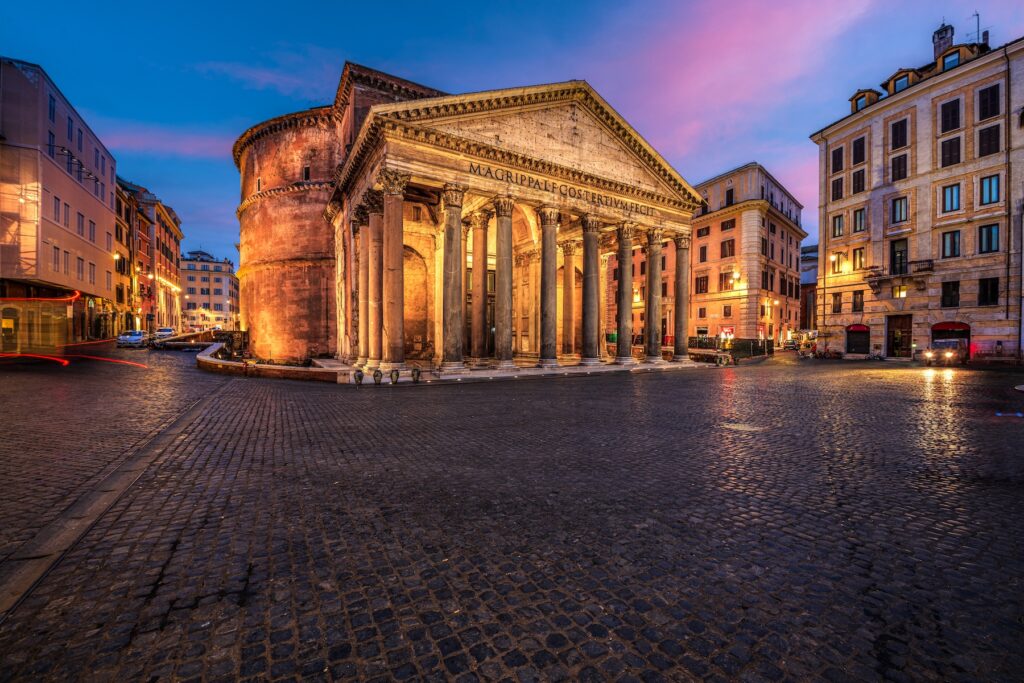
There are cities you visit and cities that visit you back. Rome is the latter. It gets under your skin somewhere between your second espresso and the moment you realise you’ve been staring at the Pantheon for twenty minutes with a half-eaten supplì in your hand. Few places manage to be simultaneously ancient and achingly cool, but the Eternal City pulls it off without even trying.
Crumbling ruins sit cheek by jowl with concept restaurants. Vespas tear past Renaissance palazzi. A speakeasy wine bar opens in a former milk shop. There’s a reason this place has been inspiring films, painters, and wanderers since before cinema was invented, and if you’re going to explore it, you may as well do it with some style.
This is our guide to Rome done properly: the best neighbourhoods, hotels worth the splurge, restaurants that won’t disappoint, and a few things the guidebooks tend to skim over.
(Without Getting Trampled)
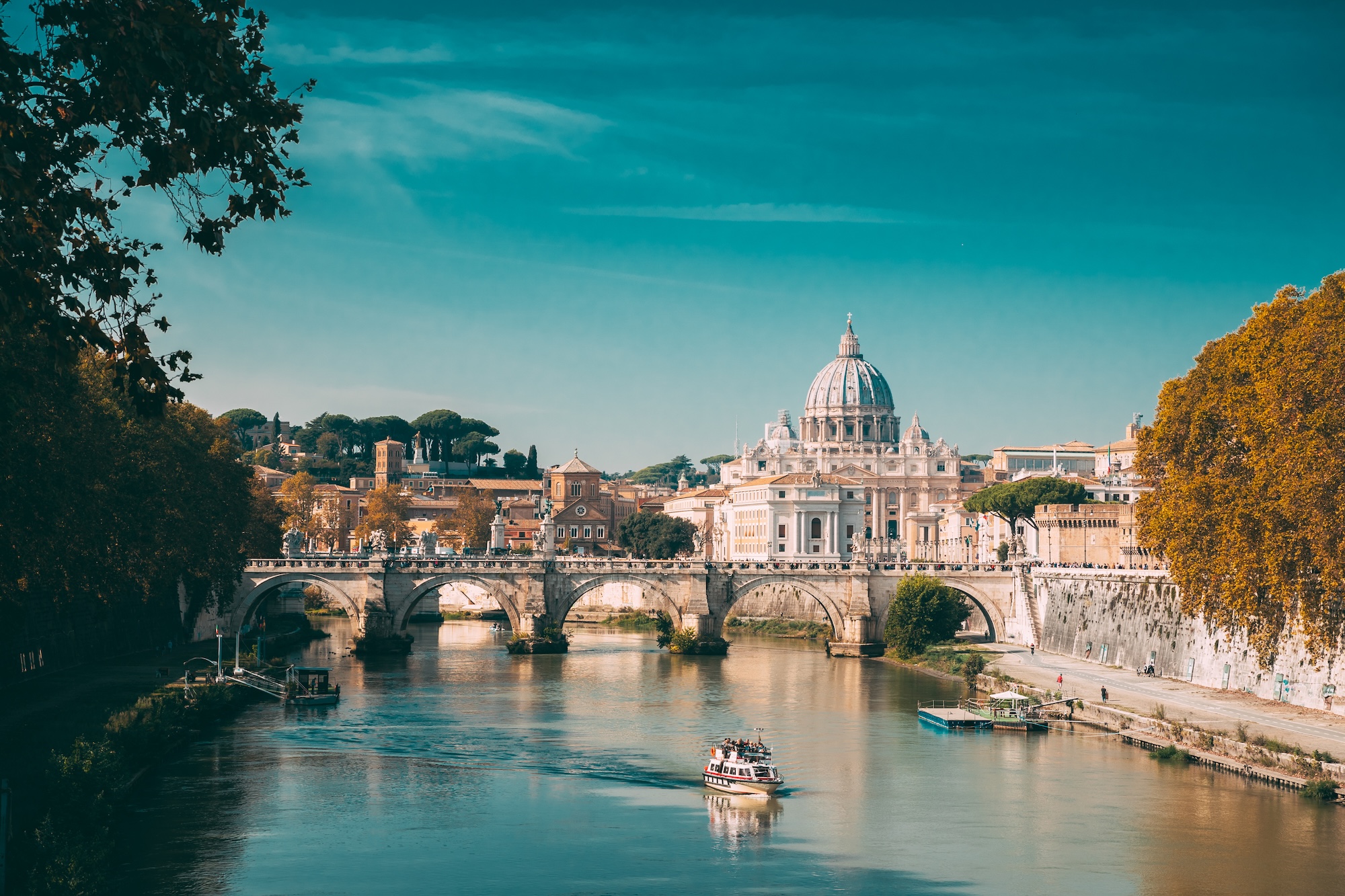
Before diving into restaurant reservations and hotel debates, do this: walk to the Pincio balcony in the Villa Borghese gardens, just above Piazza del Popolo. It’s one of the most quietly spectacular viewpoints in the city and, crucially, most tourists don’t know about it. From here you can see the city laid out below you: the dome of St Peter’s, terracotta rooftops stretching to the horizon, the faint glitter of the Tiber. Most of the headline sights are walkable from here. Use this moment to get your bearings.
Then forget the map and get lost. Seriously. Rome rewards wanderers. Duck off the main drags and you’ll stumble across Baroque fountains with nobody else around, tiny alimentari with queues of locals only, streets that haven’t changed in three centuries. This is where Rome lives.
Monti: Bohemian Without the Cliché
Rome’s most beloved neighbourhood is also its most fun to explore on foot. Monti sits just up the hill from the Colosseum but feels a world away from the tourist crush below. Its cobbled lanes, particularly Via del Boschetto, are lined with vintage boutiques, independent wine bars, and the kind of cafés where the locals actually go. The creative set has made this their home turf, and the neighbourhood has the bookshops, ceramics studios, and aperitivo bars to prove it.
Trastevere: Evening Magic
There’s a reason Trastevere photographs so well: golden light on medieval alleys, ivy tumbling off terracotta walls, the smell of something extraordinary cooking somewhere nearby. It’s touristy, yes, but forgivably so, and it earns its reputation after dark when locals reclaim the piazzas and the restaurants hit their stride. Arrive hungry at around 8pm and you’ll understand why people never want to leave Rome.
Testaccio: The Food Lover’s Power Move
If Monti is cool and Trastevere is romantic, Testaccio is the neighbourhood for people who are serious about eating. A former working-class quarter built around the old slaughterhouse, it’s now home to the Testaccio Market, the city’s best food market, and some of Rome’s most no-nonsense, deeply satisfying restaurants. No frills, no theatre, just excellent food and carafes of house wine. Arrive with an appetite.
Parioli and Prati: For the Quiet Life
These two neighbourhoods don’t make most travellers’ itineraries, which is precisely why they should make yours. Parioli, just north of Villa Borghese, is Rome’s version of a well-heeled residential quarter: all wide avenues and quiet coffee bars. Prati, sitting just across the river from the Vatican, is where Romans actually do their daily shopping. Both are antidotes to the Centro Storico crowds.
For years, Rome felt slightly behind other European capitals on the boutique hotel front. Then Six Senses arrived and changed the conversation. Housed in the historic Palazzo Salviati Cesi Mellini, a 15th-century building updated in Baroque style in the 18th century, and designed throughout by Patricia Urquiola, it manages to be genuinely luxurious without feeling stuffy. The wellness spaces are exceptional, the kind of Roman bathhouse experience that actually makes sense in this city. www.sixsenses.com/rome
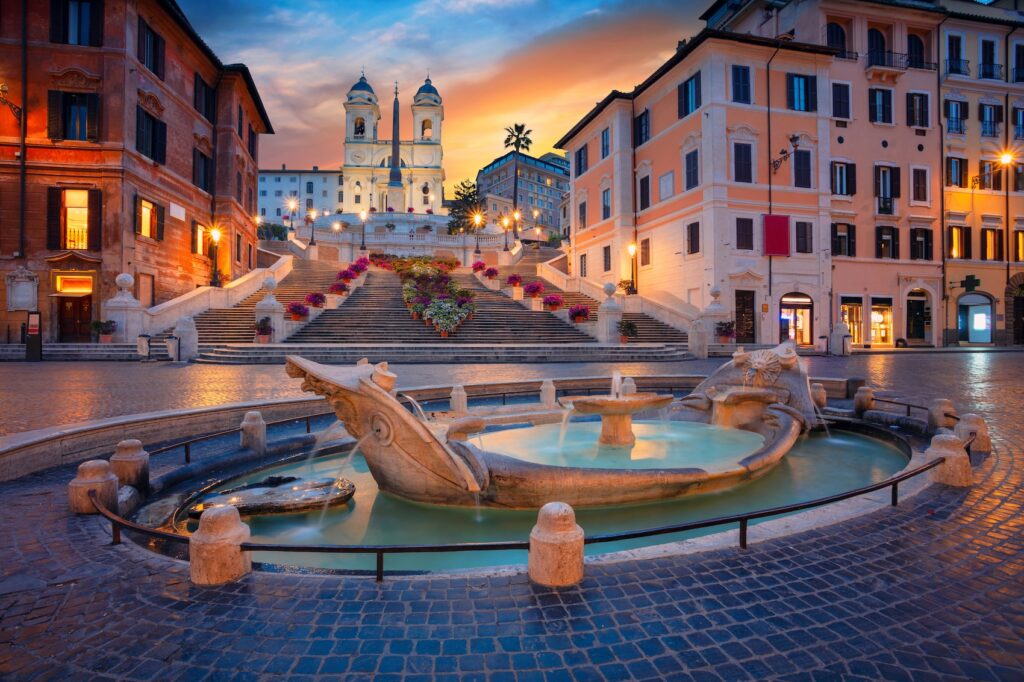
Part of the Rocco Forte stable, Hotel de la Ville is the Spanish Steps-adjacent address that keeps the fashion crowd coming back. The interiors, all terracotta stripes, precious Italian fabrics and vintage tapestries, were dreamt up by Olga Polizzi with inspiration drawn from the Grand Tours of the 18th century. The rooftop Cielo terrace with its views over the Rome skyline is worth the trip on its own. Come for evening spritzes; stay for the sunset. www.roccofortehotels.com
One of the old guard, and still one of the best. The Rocco Forte hotel sits between Piazza del Popolo and the Spanish Steps in a position that should, by rights, make it lazily rely on its address. It doesn’t. The terraced garden is Rome’s loveliest hotel garden. The Nijinsky Suite, named in honour of the Ballets Russes connection that defines the hotel’s heritage, overlooks Villa Borghese and is the sort of room that makes you cancel plans and stay in. www.roccofortehotels.com
For something with more personality and fewer chandeliers, G-Rough is the answer. Housed in a 17th-century palazzo on Piazza di Pasquino, it was founded by entrepreneur Gabriele Salini as something between a hotel and a furniture museum. Every room features original Italian design pieces from the 1930s to 1960s, by the likes of Gio Ponti, Ico Parisi, and Afra and Tobia Scarpa, displayed not behind glass but actually lived in. The Gallery Bar, with its bronze-mirrored walls and vintage leather armchairs, is one of Rome’s better spots for an aperitivo. www.g-rough.com
If you’d rather whisper your hotel’s name than shout it, Hotel Vilòn is the move. Tucked behind a small black door on the quiet Via dell’Arancio, its rooms overlook either the magnificent courtyard of Palazzo Borghese or the hotel’s own idyllic internal garden. Elegant, intimate, and genuinely peaceful in a city that rarely offers any. Downstairs, Adelaide Restaurant is quietly becoming one of the better hotel dining rooms in the city. www.hotelvilon.com
The Hassler earns a mention for its position alone, perched directly above the Spanish Steps, but it’s the Hassler Penthouse that seals the deal: a vast, sprawling suite with two panoramic terraces taking in the rooftops from the Steps to Via dei Condotti. If you’re going to live extravagantly, at least do it with a view. www.hotelhasslerroma.com
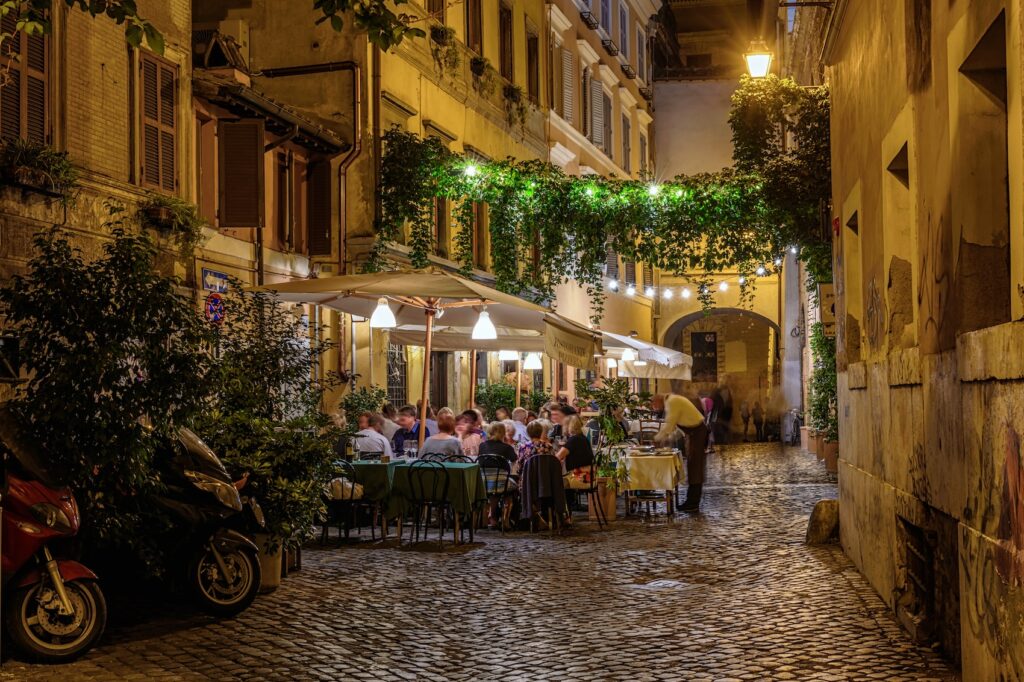
Rome has a deeply annoying habit of being full of terrible tourist restaurants with excellent locations and marvellous local ones tucked somewhere without a sign. Here’s how to avoid the former.
A word of advice before you start: if a restaurant has a man standing outside trying to usher you in, keep walking.
La Pergola
Rome’s only three-Michelin-starred restaurant sits atop the Rome Cavalieri hotel with views over the Vatican. Chef Heinz Beck has held his stars for decades and shows no sign of relinquishing them. The dining room is lavish, the tasting menus inventive without being bewildering, and the wine list is the kind of thing that makes sommeliers emotional. Book months ahead. www.romecavalieri.com/la-pergola
Zia
The most interesting restaurant in Trastevere, and possibly in Rome. Chef Antonio Ziantoni’s philosophy is radical restraint: most dishes are built from two or three ingredients, elevated through technique and presentation to something genuinely surprising. The tasting menu is the way to go, paired with suggestions from the sommelier, who knows the wine list (which leans natural and independent) better than anyone. Via Goffredo Mameli 45, Trastevere; www.ziarestaurant.com
Lo Scopettaro
Nearly a century old, and still doing the job better than restaurants half its age. It began life as a broom shop, and legend has it the brooms went to the Pope himself; the story goes that the broom maker’s wife cooked lunches that smelled so good, passers-by kept asking to join, and in 1930 the trattoria was born. It remains one of the better origin stories in Roman gastronomy. Situated in Testaccio, which tells you everything, Lo Scopettaro keeps things simple: slow-cooked oxtail, carbonara made with guanciale, amatriciana with aged pecorino. Find a table, order the pasta, order more pasta. Lungotevere Testaccio 7; www.loscopettaroroma.com
Antica Pesa
Trastevere’s most beloved institution has been running since 1922 and its cacio e pepe is textbook. The roast pork and mozzarella mille-feuille is the kind of dish you’ll think about for a week after leaving. Book a table in the back garden when the weather cooperates. www.anticapesa.it
Ruma Bottega
Not everything in Rome has to be a century old. Ruma, opened by the proprietors of a Tuscan Maremma buffalo farm, sits somewhere between a delicatessen and a Parisian bistro in the historic centre. Buffalo milk produce features heavily; the ice cream, in particular, is worth planning your afternoon around. Via di Parione 13; rumabottegaecucina.com
Pizzarium Bonci
Gabriele Bonci is Rome’s pizza radical, a man who rethought Roman-style tray-baked pizza and ended up on Netflix’s Chef’s Table: Pizza for his trouble. Pizzarium is a few minutes from the Vatican, the slices are cut to order, sold by weight, and eaten standing up on the street. This is exactly how it should work. Via della Meloria 43, Prati; www.bonci.it
Marzapane
For something more exploratory, Marzapane near Flaminio is doing something genuinely original: reviving Italy’s agricultural heritage through fire. Everything on the menu, whether smoked, grilled, cooked under ash, over charcoal or in terracotta, draws from Italy’s fields, woods, and sea. Get a seat at the chef’s table if you can. Via Flaminia 64; www.marzapaneroma.com
Rome takes breakfast seriously, which is to say Romans don’t eat a lot of it but they do it very well. A cornetto and a ristretto at a bar counter is not a sad compromise; it is genuinely one of life’s better moments.
Forno Conti in Monti is what happens when a fourth-generation Roman bread maker decides to go Scandi-inspired. Sourdough loaves from unusual flours, perfect croissants, maritozzi, the cream-filled buns that are Rome’s greatest contribution to the breakfast table. Via Giusti 18
Faro, near Porta Pia, is the city’s best single-origin coffee destination; the interiors are as contemporary as a Shoreditch café but the coffee is better. Go for a cruffin and a flat white and try to look like you come here every day. Via Piave 55; farorome.com
Pasticceria Regoli, open since 1916, remains the gold standard for maritozzi in the city. Also: the tiny wild strawberry tartlets. Also: just standing outside and looking at the window display. Via dello Statuto 60
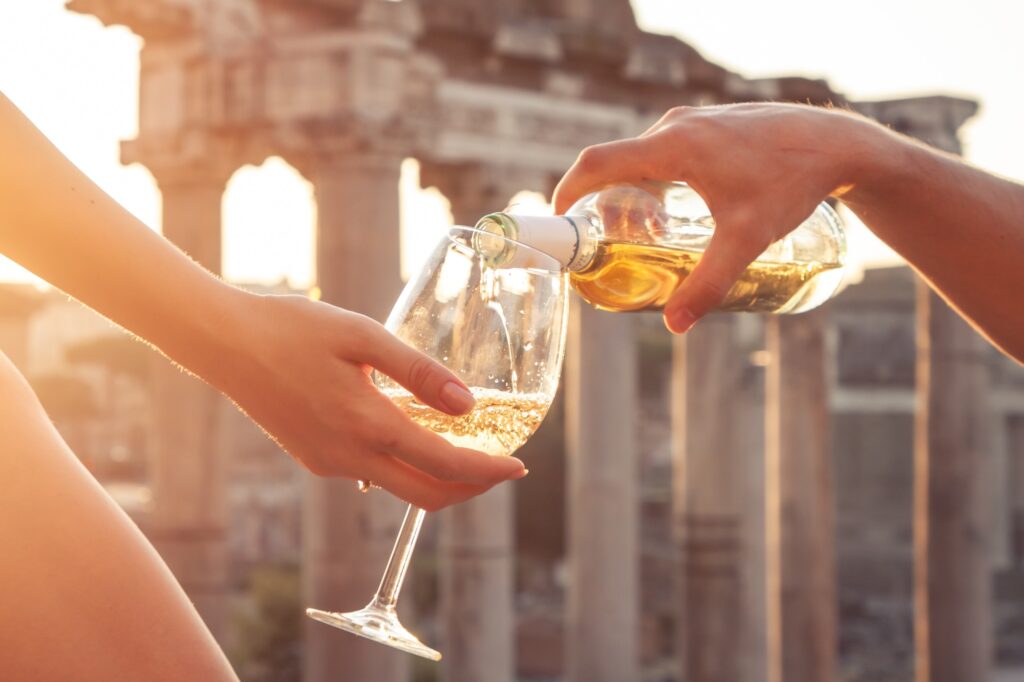
Vinificio in Testaccio is a wine bar with hundreds of natural wine labels and a sommelier who can guide you through them without making you feel judged. The food, small sharing plates, is excellent. Piazza dell’Emporio 1
Antica Latteria, behind Campo de’ Fiori, was once a milk bar and is now a wine bar with green marble counters, original tiled floors, and a cosy fireplace. The wine list leans Italian, and the tapas-style nibbles are a tip of the hat to the Spanish owner’s heritage. Arrive around 7pm. Vicolo del Gallo 4
Cielo at Hotel de la Ville is the rooftop bar for when you want the view with your Negroni. The terrace looks out over Rome’s skyline and is particularly good as the light turns golden in the evening. Via Sistina 69
Yes, you should see the Pantheon, the Colosseum, the Vatican, and the Trevi Fountain. Yes, they’re busy. Yes, they’re worth it. But here’s what else to do:
Palazzo Doria Pamphilj contains an extraordinary hall of gold-framed Venetian mirrors and one of Rome’s best private art collections, including Velázquez’s famous portrait of Pope Innocent X. The audio guide is narrated by the current Prince Doria Pamphilj. It’s wonderful.
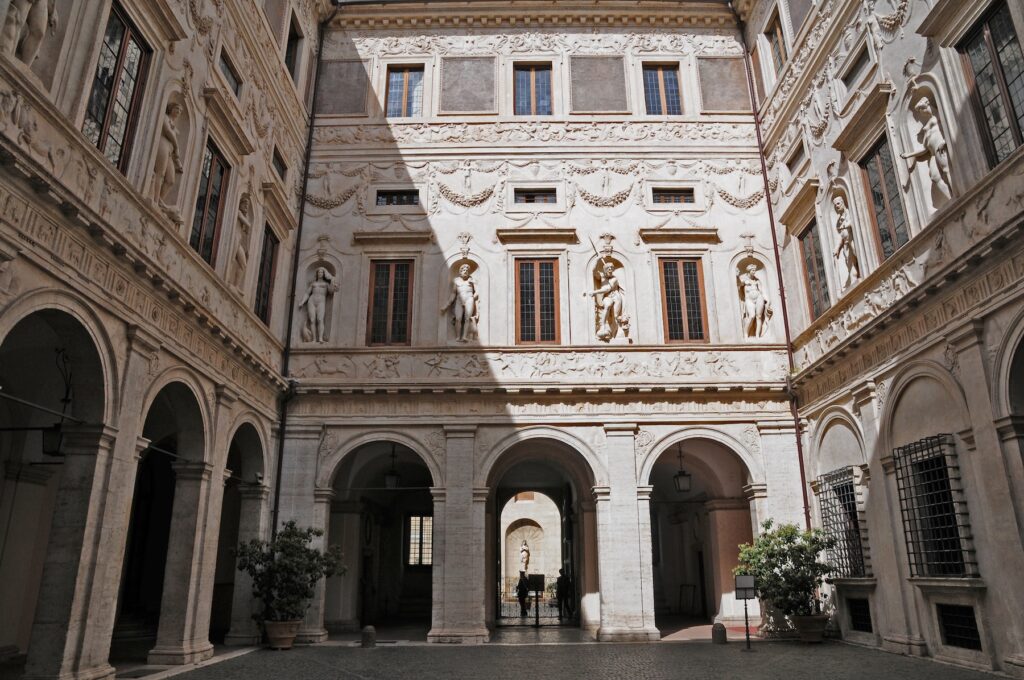
Galleria Spada is tiny and brilliant. The headline act is an architectural trompe l’oeil by Baroque genius Francesco Borromini: a corridor that appears to be 37 metres long but is actually barely nine. Worth visiting for this alone.
MAXXI, the National Museum of 21st Century Arts in Flaminio, was designed by the late Zaha Hadid and is as much about the building as the art inside. The permanent collection is excellent; the architecture is extraordinary. maxxi.art
Via Margutta, tucked between the Spanish Steps and Piazza del Popolo, is one of Rome’s prettiest little streets, home to art studios, galleries, and the kind of plant-covered walls that make excellent photographs. Federico Fellini lived here. Gregory Peck’s character in Roman Holiday lived here. You can walk through it in five minutes. Take twenty.
Gianicolo is a small hilltop park just above Trastevere with pine trees, a cannon (fired at noon every day, still startling), and views over the city that put the official viewpoints to shame. Go at sunset when the dome of St Peter’s turns pink.
Chez Dédé, on Via di Monserrato, is the city’s most satisfying concept store, housed in a 16th-century palazzo and selling vintage trinkets alongside pieces by independent Italian and international designers. Fashion, homeware, art, books, jewellery. It’s maximalist in the best sense. www.chezdede.com
Antica Manifattura Cappelli on Via degli Scipioni is one of Rome’s oldest hat shops, still making everything by hand using age-old millinery techniques. Buying a hat here is not an impulse purchase; it’s an investment in something that will outlast every other souvenir you’ve ever bought. Via degli Scipioni 46
Le Tre Sarte in the Centro Storico makes bespoke and ready-to-wear clothing from deadstock fabric sourced from Italian luxury mills; nothing is wasted, everything is made by hand in their Roman atelier. The sustainability angle is genuine, not marketing. Via dei Pianellari 15; www.letresarte.com
Rome in July and August is beautiful and absolutely brutal: 35°C heat, enormous crowds, and many restaurants closed for ferie as locals escape to the coast. Unless you have a particular reason to visit then, don’t.
October and November are the sweet spot. The tourists have largely gone home, the light is magnificent, the food festivals are running, and the temperatures hover around 20°C. March to May runs it close, with spring flowers, cooler days, and Rome at its most photogenic before the summer rush.
Avoid major Catholic holidays unless crowds are your thing. (They’re nobody’s thing.)
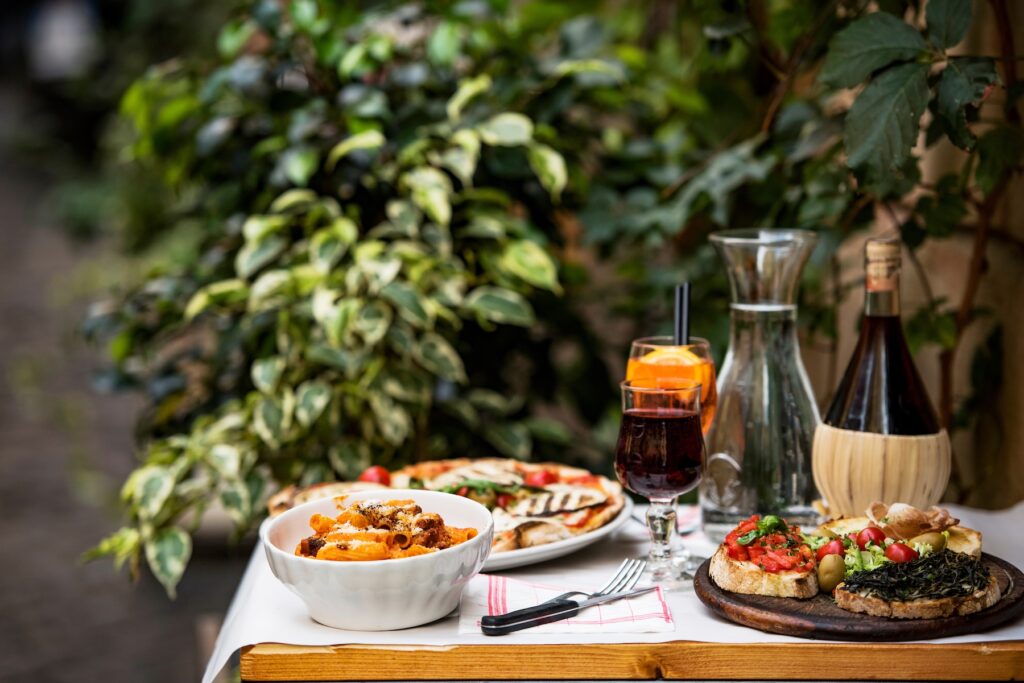
Eat late. Romans don’t eat dinner before 8pm. Arriving at 7pm gets you an empty restaurant and slightly confused service. Join the rhythm.
Walk everywhere you can. Rome is more compact than it looks on the map, and the best discoveries happen between destinations, not at them.
Have cash. Rome has more places than it should that don’t take cards, particularly in markets, small alimentari, and older bars. Keep some euros on you.
Don’t eat near landmarks. The restaurants within eyeline of the Trevi Fountain, the Spanish Steps, and the Colosseum are, with almost no exceptions, overpriced and mediocre. Walk two streets in any direction and the quality doubles while the price halves.
Book restaurants. Rome’s best places fill up. Zia, La Pergola and Marzapane all need advance reservations, sometimes weeks or months ahead. Don’t leave it to chance.
Rome doesn’t ask for much. It just asks that you show up, slow down, and pay attention. The rest takes care of itself.