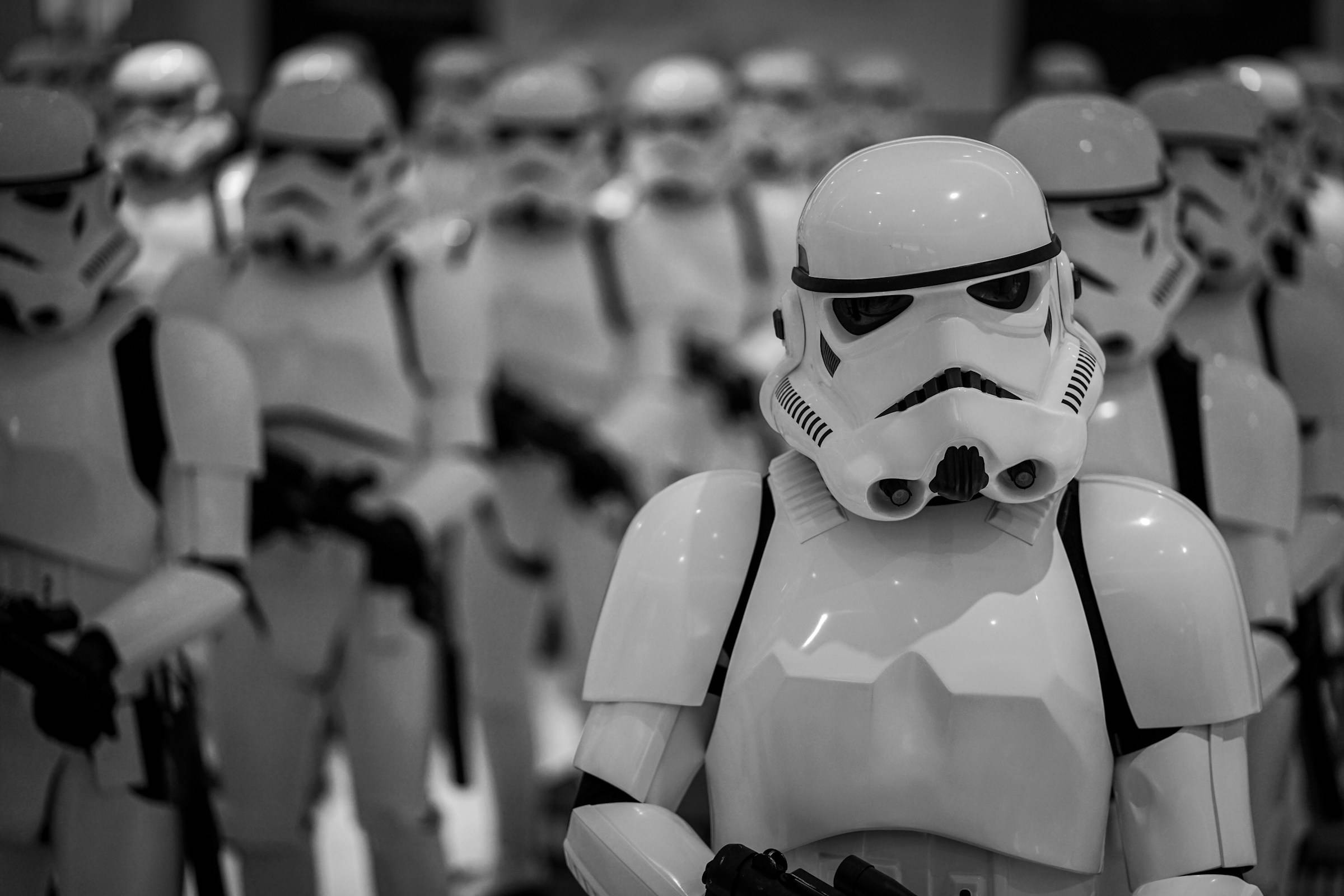


There are few cultural moments that feel both global and oddly personal. May 4th is one of them. Not because it’s a holiday in any official sense, but because millions of people—quietly, enthusiastically—decide to celebrate a galaxy far, far away.
“May the Fourth be with you” is, at its core, a pun. But like all great ideas, it stuck. What began as a throwaway play on words has evolved into something much bigger: a shared ritual for one of the most enduring creative universes ever built.
The origins of Star Wars Day are surprisingly British. The first recorded use of the phrase dates back to 1979, when a congratulatory newspaper ad to newly elected Prime Minister Margaret Thatcher read: “May the Fourth Be with You.”
From there, the phrase drifted through pop culture for decades before fans reclaimed it. By the early 2010s, grassroots celebrations had turned May 4th into a global fan holiday—complete with costumes, screenings and social media takeovers.
What’s key here is that fans created it first. Only later did studios catch up. After acquiring Lucasfilm in 2012, Disney embraced the day officially, turning it into an annual moment of releases, announcements and events.
Today, May 4th isn’t just a nod to a film franchise. It’s a full-blown cultural checkpoint—part nostalgia, part marketing machine, part communal experience.



When Star Wars: A New Hope landed in cinemas in 1977, it wasn’t just a hit—it rewired what blockbuster storytelling looked like. It blended mythology, westerns, samurai cinema and space opera into something that felt both ancient and futuristic.
What followed was a constantly expanding universe:
And then came streaming.
Series like The Mandalorian changed the pace entirely—less epic opera, more slow-burn storytelling. Suddenly, Star Wars wasn’t just cinema. It was episodic, intimate, character-driven.


In 2026, Star Wars is less a franchise and more an ecosystem.
A new film, The Mandalorian and Grogu, is arriving in cinemas, signalling a continued bridge between streaming success and theatrical spectacle.
Meanwhile, multiple TV projects continue to expand the timeline, making Star Wars one of the most active narrative universes in entertainment right now.
Looking ahead, the franchise is gearing up for its 50th anniversary in 2027, including the return of the original film to cinemas and new large-scale releases.
What’s striking is not just the volume of content, but the diversity of tone:
Star Wars has stopped trying to be one thing. It’s become many.
At its simplest, Star Wars is a story about good versus evil. But that’s not why it endures.
It endures because it’s flexible.
It can be:
And every May 4th, it resets itself. New fans enter. Old fans return. The mythology continues.
There’s something quietly poetic about celebrating Star Wars with images of open horizons—oceans, sunsets, distant planets.
Because that’s what the franchise has always been about:
possibility.
A vast, cinematic sense that there is always something beyond the edge of what you know.
And maybe that’s why, nearly 50 years on, it still works.
Not because of lightsabers. Not because of nostalgia.
But because, at its best, Star Wars still feels like standing at the shoreline—looking out—and realising the story doesn’t end here.