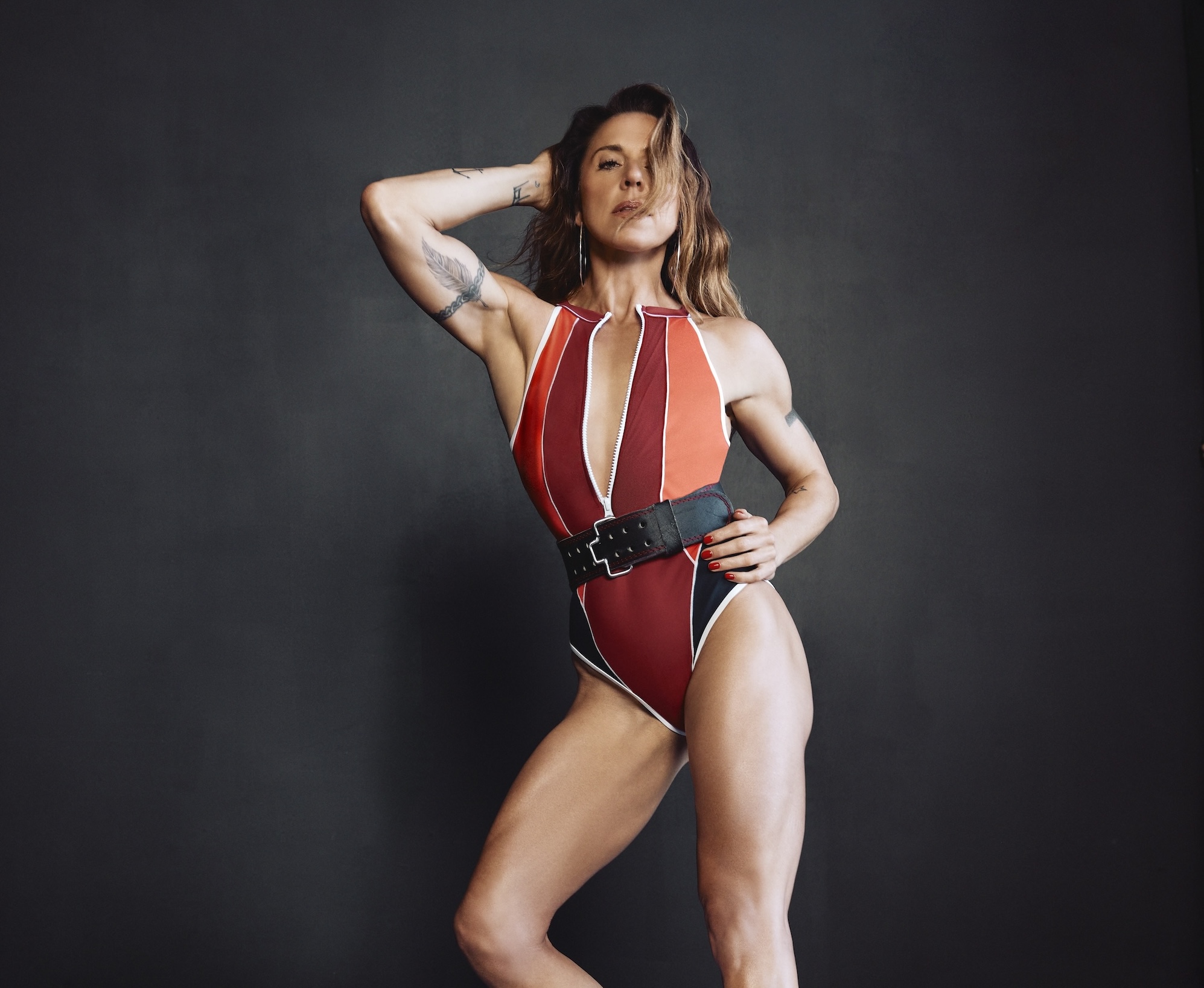

There is something wonderfully fitting about Maisie Adam calling her new tour Whatsherface. It is a title that suggests the half-remembered, the nearly famous, the person you know you know but can’t quite place. Except, increasingly, everyone can place Maisie Adam.
There she is on Taskmaster, turning surreal instructions into competitive theatre. There she is on Last One Laughing, trying not to crack in a room full of comedians whose entire professional purpose is to make other people crack. There she is talking women’s football with Suzi Ruffell on Big Kick Energy, appearing at Soccer Aid for UNICEF, and turning up on our screens with the sort of relaxed sharpness that makes her feel less like a visiting comic and more like someone who has wandered into the nation’s living room and immediately improved the mood.
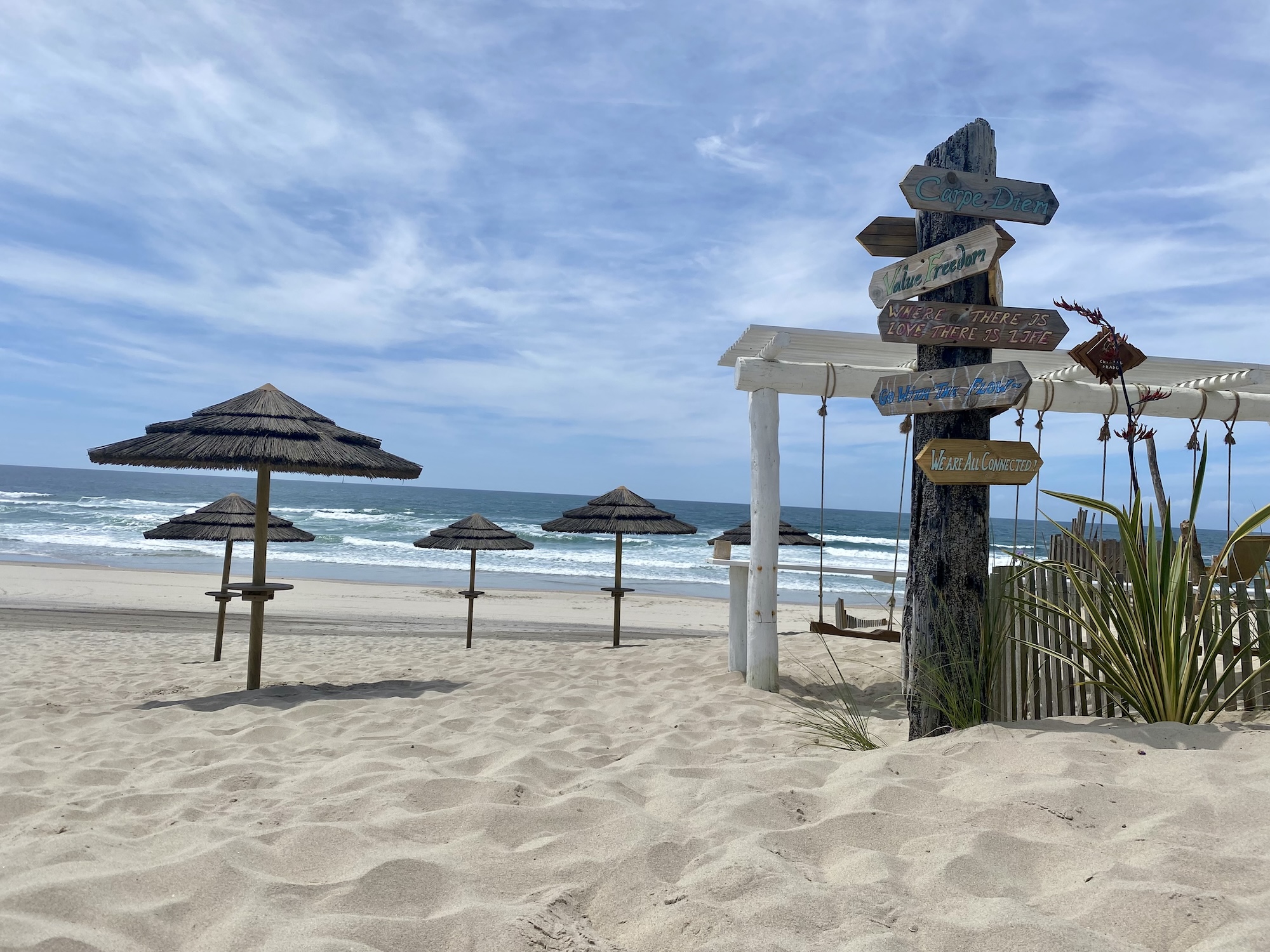
When SALT speaks to her, Adam has just come off a run of long filming days across Sussex. “We started in Hastings, then we were in Eastbourne, and Camber Sands,” she says, before adding that they ended up near Lewes, “in the countryside up there.” It sounds idyllic until she mentions the heat, hay fever and the long days. Even then, she sounds cheerful. Maisie Adam gives the impression of someone who finds material in almost everything, including the inconvenience of weather, geography and being asked to perform while the entire country appears to be wilting.
Born and raised in Yorkshire, Adam has lived in Brighton since 2017, moving down between Christmas and New Year and gradually making the city part of her comic map. She has recently made the move to Hove. “I’ve gone to the dark side,” she says. “I’m liking it. It is flatter.” Anyone who has climbed Elm Grove with a bag of shopping will understand the artistic significance of this.
For Adam, place matters. Not in a postcard way, but in the way humour shifts from region to region, town to town, room to room. “It’s always great to move somewhere else and sort of see that difference in humour,” she says. “Even when I go on tour, you can sense the different centres of humour geographically all over the UK.” Yorkshire, she says, has “such a strong sense of humour in quite a direct and quite easygoing way”. Brighton, by contrast, has its own in-jokes, its own oddities, its own cocktail of personalities.
“I really like picking up the weird little quirks of various places,” she says. “Being somebody who grew up in Yorkshire shaped my voice in that observational sense. I think I’ve got quite a knack for looking at people and being able to shape a character from that person.”
Her childhood village sounds, in retrospect, like a comedy training school disguised as rural life. “I grew up in quite a small village in Yorkshire that had quite strong personalities,” she says. “I reflect on it now and I’m like, I think I lived basically in the set of a sitcom. It was somewhere between This Country and The Vicar of Dibley.”
Brighton could hardly be more different. “It’s a city, it’s vibrant, it’s full of such diversity in terms of not just people, but the arts and the scene that it has going on here,” she says. “There’s literally something for everybody.” For a comic who thrives on observation, that is not merely pleasant. It is ammunition.
Her relationship with Brighton comedy has been a proper climb, both creatively and literally. She started, as most comics do, in rooms that make you question every life decision. Her first Brighton gig was at the Rialto Theatre, on a site she says is now home to the cocktail bar Alphabet. “I think I had about four people,” she says. “Two were my mates. It was mortifying.”
Since then, she has worked her way up through the city’s comedy ecosystem: the room above the Quadrant, the small room at Komedia, the big room at Komedia, the Corn Exchange. Now comes the Brighton Dome, “the big boy room”, as Adam puts it, when Whatsherface arrives as part of the Brighton Dome Comedy Festival on 21 October 2026.

“I’ve never done the big room of the Dome before,” she says. “This will be a first for me. I’m nervous, but I’m really excited because I’ve gone to see so much brilliant stuff in that room over the last eight years that I’ve lived here.” She mentions seeing Self Esteem, James Acaster and Ed Gamble there. The room clearly means something to her. It is not just another date on a tour poster. It is a local milestone.
One of her favourite Brighton Dome memories, however, belongs less to prestige and more to controlled lunacy. She was hosting a Christmas show. The closer was Sam Campbell, the Australian comic whose stage presence often suggests a children’s entertainer has been possessed by a malfunctioning art installation.
Campbell finished by catapulting Marigold rubber gloves filled with water into the audience. Adam’s parents were watching. “He went, ‘What’s your dad’s name?’ I said, ‘Phil.’ And he got on the mic and went, ‘Phil Adam, come to the front.’” Her dad duly joined them on stage. “At no point would he have probably thought, ‘Oh, it’ll all end with me and Maisie and Sam Campbell on stage at the Brighton Dome flinging gloves filled with water into people’s faces.’ But such is life.”
That phrase could almost be a subtitle for Adam’s career. Such is life. You start in a room with four people, two of them loyal friends, and somehow end up on national television throwing yourself into the comic machinery of Taskmaster.
Adam talks about Taskmaster with real affection. She had grown up loving the show and had a vivid memory of seeing Greg Davies live when she was younger. “I remember leaning forward on the chair in front of me because I was laughing so hard my ribs were really hurting,” she says. Meeting your heroes is always risky, but Taskmaster delivered. “I don’t think I’ve been on a show before or since then that’s made such a conscious effort to have such a lovely vibe on set.”
The myth of television can be all trailers, egos and careful separation. Taskmaster, Adam says, was the opposite. “There’s none of this going back to your trailer and having lunch on your own, which seems to be very common in telly. Instead, you all sit round in the Taskmaster house and decide on a delivery together. All the camera people are sat with the sound people who are sat with the onscreen people. It’s lovely.”
Last One Laughing was a different kind of comic experiment. The Prime Video series takes a brilliantly simple schoolroom concept and gives it a cruel professional twist: make everyone laugh, but do not laugh yourself. “Your job every day is to make people laugh, but it’s very, very rarely to make other comedians laugh,” Adam says. “There’s a really strange vibe to trying to make your colleagues, who you think are just the funniest people in the world, laugh.”
It also turns out comedians are competitive. “We don’t want to go out first,” she says. “I was quite relieved when Alan and Benny went out. I was like, right, I’m not first.”
The reason the format works, she thinks, is that it taps into something primal. “Anybody who’s been at school and got the giggles at the back of the classroom knows how hard it is to stop once they start.”
Adam is now in the work-in-progress stage of Whatsherface, which begins its tour in September 2026 before reaching Brighton in October and London’s Hackney Empire later that month. This is the less glamorous but more revealing part of comedy, when the jokes are alive and slightly feral, and a comic is working out what the show actually wants to become.
“It’s still got all the ingredients,” she says. “It’s just trying to work out which bit goes where.” She likes that stage, partly because it demands vulnerability. “It’s really nice working it out in real time in front of an audience. I quite like the vulnerability of that.”
As for what audiences can expect, Adam is careful not to over-explain a show still being built. But she knows the feeling she wants in the room.
“My favourite thing at comedy gigs is looking out to the audience and seeing people prodding the person next to them going, ‘Oh my God, that’s you.’ I like to try and tap into stuff that makes people see themselves.”
That instinct may explain why Adam has become such a natural fit for football. Not just because she is a fan, although she absolutely is, but because football and comedy both depend on communal electricity. “There’s quite a lot of similarities between football and comedy,” she says. “It’s a special place that people go to feel together and to feel connected over something that they’re all collectively watching.”
She has followed Leeds United since childhood, but living in Brighton has given her another allegiance. “I always say now I’m a Leeds United men’s fan and Brighton women’s fan,” she says. That dual identity gives her access to very different fan cultures, and therefore, inevitably, material.
Her podcast Big Kick Energy, co-hosted with Suzi Ruffell, has become part of the expanding conversation around women’s football. The show is funny, inclusive and knowingly chaotic, but its rise also reflects something bigger: women’s football is no longer being politely ushered into the sporting margins. It has its own language, rituals, heroes and jokes.
“It’s been such a fun time for women’s football,” Adam says. “It’s just going from strength to strength.” Big Kick Energy has been running for three years and has built what she calls “such a wonderful audience”, including sell-out live shows. “It’s people right across the football fandom spectrum. It really reflects the inclusive nature of women’s football as a fandom.”
They have welcomed major names too. Keira Walsh joined them for a Christmas show. Georgia Stanway gave them tattoos in Germany. Jill Scott has become a regular presence in Adam’s football universe, both through the women’s game and through Channel 4 coverage of the Women’s FA Cup. “She’s annoyingly funny actually,” Adam says. “A lot of people assume they could do comedy. Jill has no idea she could actually do it.”
Ask who she would like on the podcast and Adam has a football fan’s wish list ready. Ella Toone, because “she seems a real good laugh”. Lucy Bronze, “before she retires”. And like so many followers of the women’s game, she is already looking towards Brazil, where the FIFA Women’s World Cup takes place in 2027. “All eyes are now on next summer,” she says. “Very, very exciting.”
Adam’s own football diary has included Soccer Aid for UNICEF, where she has become part of the celebrity-football crossover that now sits comfortably alongside her comedy career. The joke, perhaps, is that none of this feels like a pivot. Stand-up, panel shows, football podcasts, charity matches, Sussex filming days, Brighton Dome. It is all connected by the same skill: reading the room, finding the energy, and knowing exactly when to make the pass.
Before we finish, she offers two names worth watching: Andrew White, who she says is “just fantastic” and “smashing it” whenever she sees him on stage, and Lindsey Santoro, who Adam thinks “should be bigger than she is”. “I don’t think I’ve watched her have a bad gig ever,” she says. “She’s just excellent.”
That generosity towards the wider circuit feels telling. Adam remembers the people who backed her early, including the team at Hastings Comedy Festival, who booked her long before television made her an easy sell. She keeps going back because “they always had my back”.
There is a lovely symmetry in that. Maisie Adam is now moving into bigger rooms, bigger shows and bigger audiences, but the engine remains the same: grassroots comedy, live rooms, local scenes, and the strange magic that happens when a group of people sit together, hoping to be surprised.
Maisie Adam’s Whatsherface tours the UK this autumn and into next year, coming to Brighton Dome on Weds 21 Oct, Hackney Empire on 29 Oct, and Soho Theatre Walthamstow on 11 March 2027.