The history of street art can be traced back to ancient times, with work discovered on the walls of the earliest cities and preserved in cave systems. Its modern equivalent emerged around the same time as mass-market spray paint.
Something that started in the back alleys of New York City has evolved into an iconic element of urban culture. While the techniques and ambition might have been elevated, the form’s blend of humour, expression and social commentary now sees it jostle for space in the world’s finest galleries.
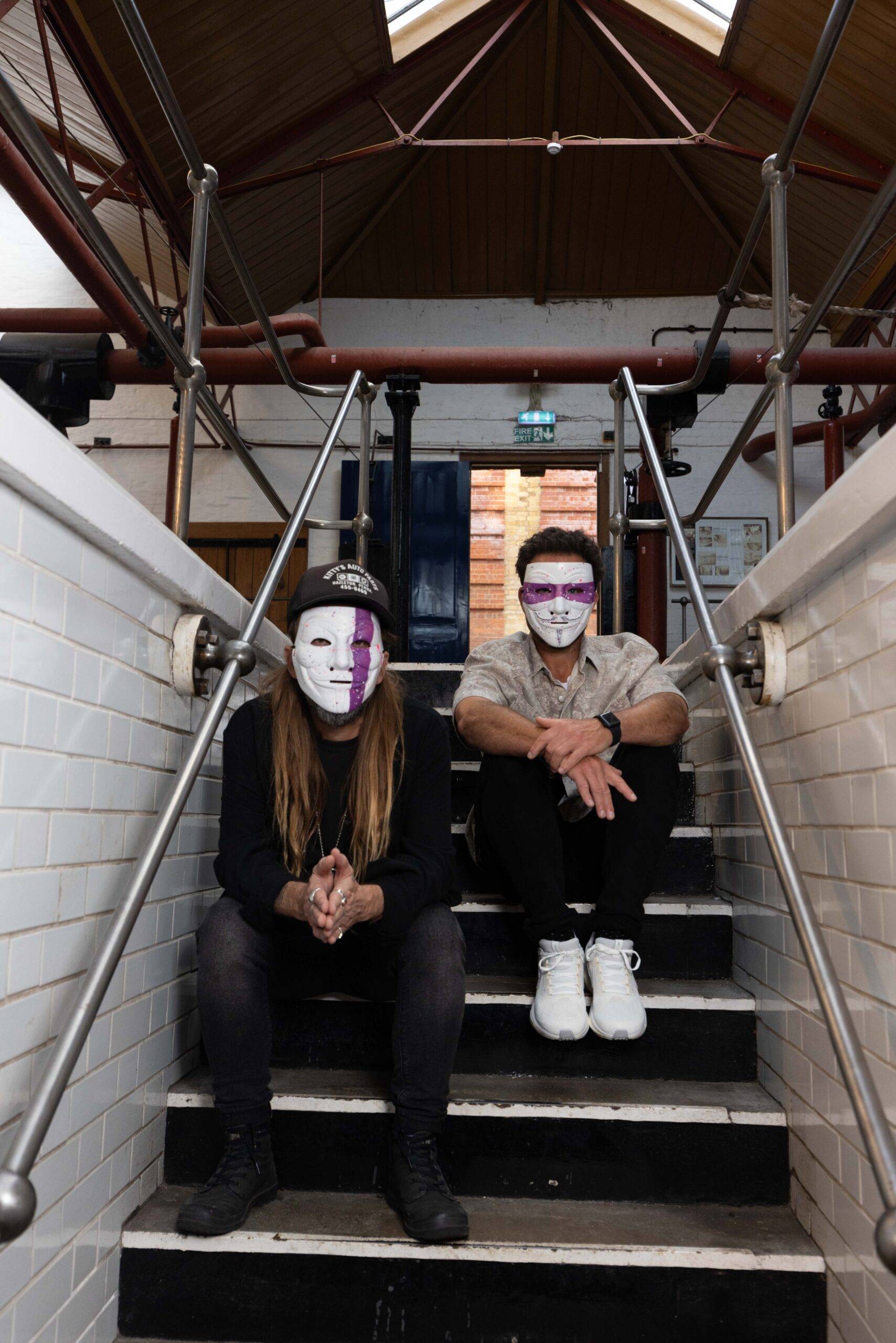
Creating vibrant artworks in a distinctive pop-art style, The Postman have established itself as one of the South Coast’s most renowned street art outfits.
Blending photography, collage, paste-ups and spray paint, this anonymous artistic collective (they believe the art should be the focus, rather than its creators) has exhibited internationally and been commissioned by Noel Gallagher and the Bob Marley Foundation, as well as collaborated with renowned photographers Adrian Boot, David LaChapelle and Dave Hogan.
Brightening up otherwise dull urban spaces with swathes of bold colours and a feel-good energy, The Postman celebrates cultural icons from across music, film, and fashion.
As they’ve just unveiled a major new public artwork in Brighton & Hove, we caught up with these inspiring urban artists to find out a bit more about their practice.
How would you describe yourself to people who haven’t come across your work yet?
The Postman is an urban art collective based in Brighton. Our work sits somewhere between pop art and street art: bold, colourful, inclusive, and upbeat.
We celebrate people from iconic personalities (musicians, cultural figures, etc.) to individuals within local communities – people with stories. At its core, our work aims to spread joy. If someone stops, smiles, and takes a picture, that’s mission accomplished.
Can you talk us through your creative process? I imagine it’s a bit more involved than being equipped with some spray paint and some ambition.
Our process involves several steps before we arrive at the final artwork. We start by researching our subjects and sourcing suitable photography to use as a base. This often involves collaborating with photographers who captured iconic moments in history. From there, we build the artwork using multiple layers of colour, texture, and abstract painted elements. Spray paint actually plays only a very small part in the overall process. Once we’re happy with the piece, we bring it back into the physical world in the form of urban art.
You’ve produced several large-scale public pieces. Do you get free rein on these, or is there a collaborative process?
Many of our pieces are created entirely by us, without the involvement of anyone else – that’s how we started.
In recent years, we have increasingly worked on commissioned pieces, usually with a brief. To some extent, this is a collaborative process, but we generally have free rein in how we interpret the brief. We work with communities, councils, local organisations, and private clients to help celebrate the people our commissioners care about.
Where can people in the South East see your work?
Brighton & Hove is our home turf, and our work can be found throughout the city – from small paste-ups along the seafront and bold pieces in The Lanes, to large-scale indoor and outdoor murals. We’re currently working on our biggest public mural to date: a 60-metre, animal-themed gallery at the site of the new cancer centre at the Royal Sussex Hospital.
The British built environment since the mid-20th century has been fairly bland and uninspiring. Can high-quality street art help elevate areas?
We strongly believe that street art can change the way people experience the environments they live in. A mural can transform a run-down wall into a landmark and bring identity, energy, and pride to communities. It invites people to slow down and engage with their surroundings. Street art is also far more affordable than urban redevelopment, yet it often delivers a greater emotional impact.
How does art make its audience happier?
Art makes people happy by creating unexpected moments of delight. Stumbling upon urban art can lift your mood, spark curiosity, or simply make you smile. Street art is especially powerful because it’s freely accessible – there’s no ticket, no “don’t touch” sign, no barrier to enjoyment, and everyone experiences it equally.
Are the lines between what is exhibited in galleries and what you can see out in the street becoming increasingly blurred? How do you think the traditional art establishment is responding to this?
Street art has certainly boomed over the past decades, and many artists are now exhibiting in major galleries.
What was once the outsider has become a key influence on contemporary visual culture, and galleries are recognising the cultural weight of street art. Even big brands are using street art to connect with their audiences – whether that’s authentic or not is for the viewer to decide.
It has been suggested that pop will eat itself, as culture becomes increasingly self-referential. How can art stay fresh and ahead of the game, while still honouring what has come before?
Art can bring a new perspective. It’s not just what is depicted, but how it’s interpreted and experienced in the moment. When originality and intention drive the work, it can honour the past while still feeling alive and fresh.
What would your advice be to anyone wanting to get into creating art? Are there any rules, or is defying convention a positive thing?
There are no rules – and if there are, break them. Start creating, make mistakes, and then try again. The only thing that matters is to keep making. Don’t wait for permission; street art taught us to ask forgiveness later. If you create with authenticity, an audience will find you.
www.thepostmanart.com