

The Best Mini-Break Destinations For 2026
If you’ve felt dragged down by the long winter months, it might be time to
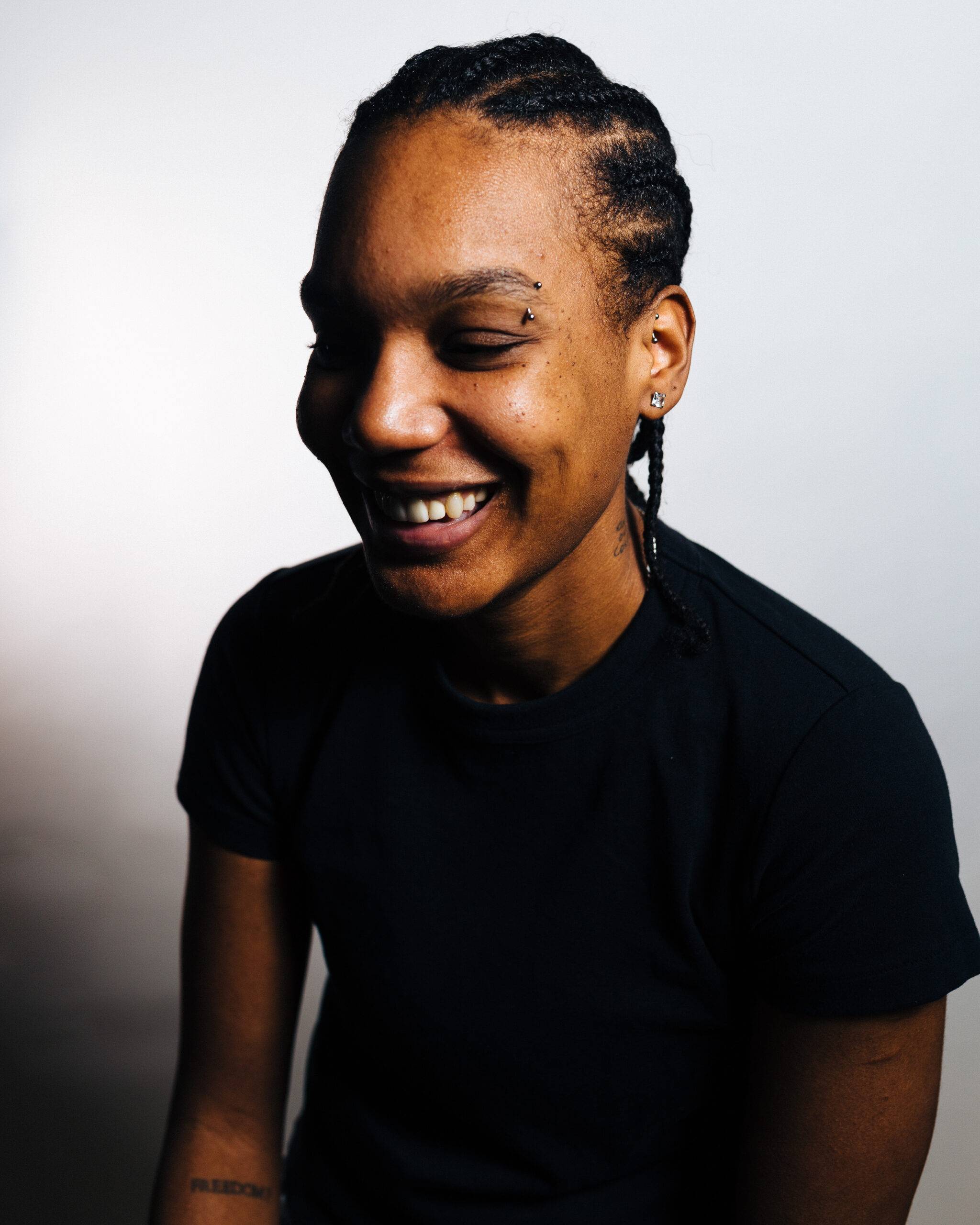
Filmmaker talks about the pursuit of change
By Stuart Rolt
Her voice is gentle, but when Shakira Alleyne talks about her documentary, Neurodiversity in Music: Improving Access, there’s no mistaking her determination. While the film is an artistic and professional milestone, it also offers a distillation of her own journey through a society (and an industry) that has been slow to cater for those who experience the world differently.
Alleyne recalls being a child who was drawn to the arts. “I always loved writing. I thought I’d be an author, maybe write a book one day,” she says, her eyes lighting up at the memory. “But it wasn’t until my teens, when my mental health hit a low point, that I started teaching myself the guitar and writing poetry.”
Her talents as a musician, director, and later, an educator, seem to inform her developing role as an advocate for better inclusion and understanding, as she seeks to inspire and lift those struggling for a foothold in the music world and beyond.
Her own journey into music was more than a distraction; it was an act of survival and self-expression. “It was a way for me to channel all the feelings I couldn’t say out loud,” she remembers. “That sense of not fitting in, even in the arts, even in music… those were things I could finally explore through sound and words.”
Her experimentation branched into rock and indie, learning to write songs and play piano. She never saw herself as a “singer” in the traditional sense, more a storyteller and creator drawn intuitively to the possibilities beyond convention. “I’d have all these ideas in my head,” she laughs. “Sometimes it came out as fragmented lyrics or just noise – anything to express what was inside. Rules never made sense to me. I wanted to break them.”
The spark behind her documentary didn’t come from any initial ambition to make a film, but from a growing advocacy for encouraging marginalised voices in the creative arts. “I’d been thinking and talking about neurodiversity in music for a long time,” she explains. An Associate Consultant at Sound Connections, a charity working across the music community to boost inclusion, equity and social justice, Alleyne’s work saw her organise a panel of neurodiverse artists at a conference on inclusive practice. “We had this group, where each person had completely different backgrounds and lived experiences, but once the conversation started, something clicked. People kept saying, ‘I go through that too!’ Watching how much resonance and connection came out of those stories really shook me. It made me want to do more.”
Determined to keep the discussion going and broaden its reach, Alleyne started developing a research project centred around neurodiversity and its intersection with the music industry. Yet the task of presenting any findings impactfully proved intimidating. “The word ‘research’ makes you think of a report, or a pile of statistics,” she admits. “That felt so dry compared to the energy of those conversations. I wanted it to be something people could really experience, not just read about.”
Like many breakthroughs in her life, Alleyne’s decision to make a documentary came suddenly, but with clarity. “I just thought one day: ‘Why not do a documentary?’ I love them, I love short films, and I wanted to try something different.” It was a leap of faith: Alleyne had never shot or edited a film before. “I hadn’t even picked up a camera before. I figured, if I could learn music, I could probably teach myself this, too!”
This was the starting point for a self-taught crash course in filmmaking, production logistics, and hands-on storytelling. Alleyne partnered with Roundhouse, a celebrated London music venue and youth charity, borrowing a camera and crafting a basic production plan. “I watched dozens of YouTube tutorials, scribbling notes on everything… how to turn stuff on, how to set up the camera, all the basics I’d usually overlook.”
Before filming any interviews, she spent a day simply getting used to the kit, shooting playful footage of her family to calm her nerves. When the day arrived to work with her participants, she leveraged every ounce of new technical skill, trusting that authenticity and intent would bolster the cinematic experience.
Central to the structure was Banji Ibidapo, a panellist from Alleyne’s earlier conference, whose story set the tone for the film’s emotional arc. “I really wanted to create space for Banji, just as he was, with all the pauses and silences left in. I wanted this to be real conversations, not a performance.”
Learning the techniques and nuances of editing was also a welcome challenge. Alleyne spent countless hours reviewing raw footage, learning how to cut sequences, and mastering elements like subtitles. “Even captioning was new for me,” she says, “but I knew how important it was. I wanted anyone to be able to access this work, regardless of how they process information.”
Neurodiversity in Music: Improving Access was never meant to be a major production. Alleyne envisioned a compact, ten-minute piece, providing simple but invaluable insight. But with every interview, every moment of connection captured on film, the project’s scope grew exponentially. “I just kept getting new ideas. All these stories deserved to be heard in full.” The final film stretched to fifty minutes, rich with perspectives from neurodiverse artists and their allies.
As she weaved music, panel footage, and candid conversation into the final edit, Alleyne found that her instincts around documentary work, like background noise and textures, were crucial. “It’s not just talking heads. It’s the atmosphere, sounds, how the room feels, and what silence means in a conversation. Music, emotion, awkwardness… all of it.”
Public reception exceeded her expectations. While the documentary was initially created to be screened for clients and during school engagements, Alleyne soon held a cinema premiere in Shoreditch, followed by uploading the film to YouTube for public access. “For me, it was always about the conversation. The more people who could see the film, the better. If it reached just a handful of people who felt seen, I’d achieved my goal.”
To truly understand the film’s purpose, you need to look at the barriers to participation across the arts for neurodivergent creators, particularly in music. “I’m autistic, and I didn’t actually get diagnosed until I was 24,” she explains. The process, which involves a daunting two-year wait, was followed by an equally long period before meaningful support became available. “Those years in between diagnosis and getting help are incredibly isolating. You learn more from random strangers on the internet than from any official source. That’s one reason I wanted my film to be accessible to everyone.”
In the music industry, Alleyne says obstacles begin early and often go unacknowledged. “It’s not about giving neurodivergent people special privileges,” she clarifies. “It’s about equity… making sure people don’t get shut out at the first hurdle. If you have a different way of processing social situations, or if loud environments overwhelm you, you’re immediately at a disadvantage. The industry rewards connections, quick thinking, fitting in, and if those aren’t your strengths, you can get overlooked, no matter your talent.” The struggles aren’t just personal. Cultural expectations about how music should be made, taught, or consumed often exclude those who don’t conform.
Alleyne’s documentary comes at a fraught time in the conversation about neurodiversity. We’re at a moment where awareness collides with misinformation and people acting in bad faith. She notes a radical change even over the last four years. “When I was diagnosed, hardly anyone would talk about it in public, let alone on social media. Now, it’s everywhere. People say, ‘Everybody’s a little bit ADHD’ or ‘a little bit OCD.’ It’s great that we’re talking about neurodiversity, but sometimes it feels like the real barriers people face are getting lost in the mix.”
She is not ignorant about the dangers of superficial inclusion without investment in meaningful structural change. But Alleyne’s hope persists, anchored in the power of open, honest storytelling. “As long as there are artists, educators, and organisations genuinely working for change, there’s hope,” she says. “That’s what matters.”
Her advocacy does not end with films. Through her work at Sound Connections and at Deaf Rave, a charity celebrating access through tactile and visual musical experiences, she models leadership built on action. Of special importance are the creative workshops she’s running, specifically for autistic people diagnosed later in life. “Years of experience, of feeling out of place, taught me what’s missing in most programs,” she says. Alleyne envisions a project where neurodivergent participants are not just accepted but centred, where their forms of self-expression inform the workshop itself, rather than being grafted onto existing structures.
Policy reform is also on her mind. “I’d love to contribute to meaningful change in how schools, venues, and festivals approach accessibility, not just ticking boxes, but actually asking people what they need, trying solutions, changing if it doesn’t work.” Her advocacy is informed by frustration with institutional inaction. Her view aligns with growing calls in the disability rights sector for access to mean fostering a spirit of equity and belonging rather than just meeting legal requirements.
Back in her own artistic life, Alleyne continues to push the boundaries of genre and form. Her music, a blend of lyrics, experimental soundscapes, and unorthodox production, is as much about healing and seeking as it is about performance. She laughs about her lack of music theory, suggesting that it might be her greatest asset: “Not knowing the rules kept me from worrying about breaking them. I could just be in the music… whatever that meant that day.”
It is this unfiltered approach, she believes, that she now carries into her filmmaking and workshop development. “Everything is about the story and the community, and making something that feels true to our experience,” she says.
She hopes that participants don’t just leave inspired but armed with a practical sense of what is possible. If the arts wants to appeal to the widest audience possible, then it has to offer room for many different voices. She reflects on the glacial nature of wider change – in schools, music, and everyday life. “You need to start young; you need education systems that support differences from the beginning. The sooner we stop pretending everyone learns and creates the same way, the better off society will be.”
Alleyne is already dreaming up her next steps: new films, expanded workshops, deeper policy engagement, and, always, more music. “Being creative is a way for me to exist in the world, especially when the world doesn’t always make sense.”
“Every time I see someone watch the documentary and say, ‘That’s my experience too,’ I know I’m doing something right. There’s still so much to do. But I’m not going anywhere.”
Shakira Alleyne’s documentary, Neurodiversity in Music: Improving Access, along with a selection of her other work, is available at: www.youtube.com/@ShakiraAlleyne www.sound-connections.org.uk
If you’ve felt dragged down by the long winter months, it might be time to
BBC Three’s hit comedy, Things You Should Have Done, returns for a new season on
We talk to the iconic choir, before they recreate Roaring 20s glamour for their new