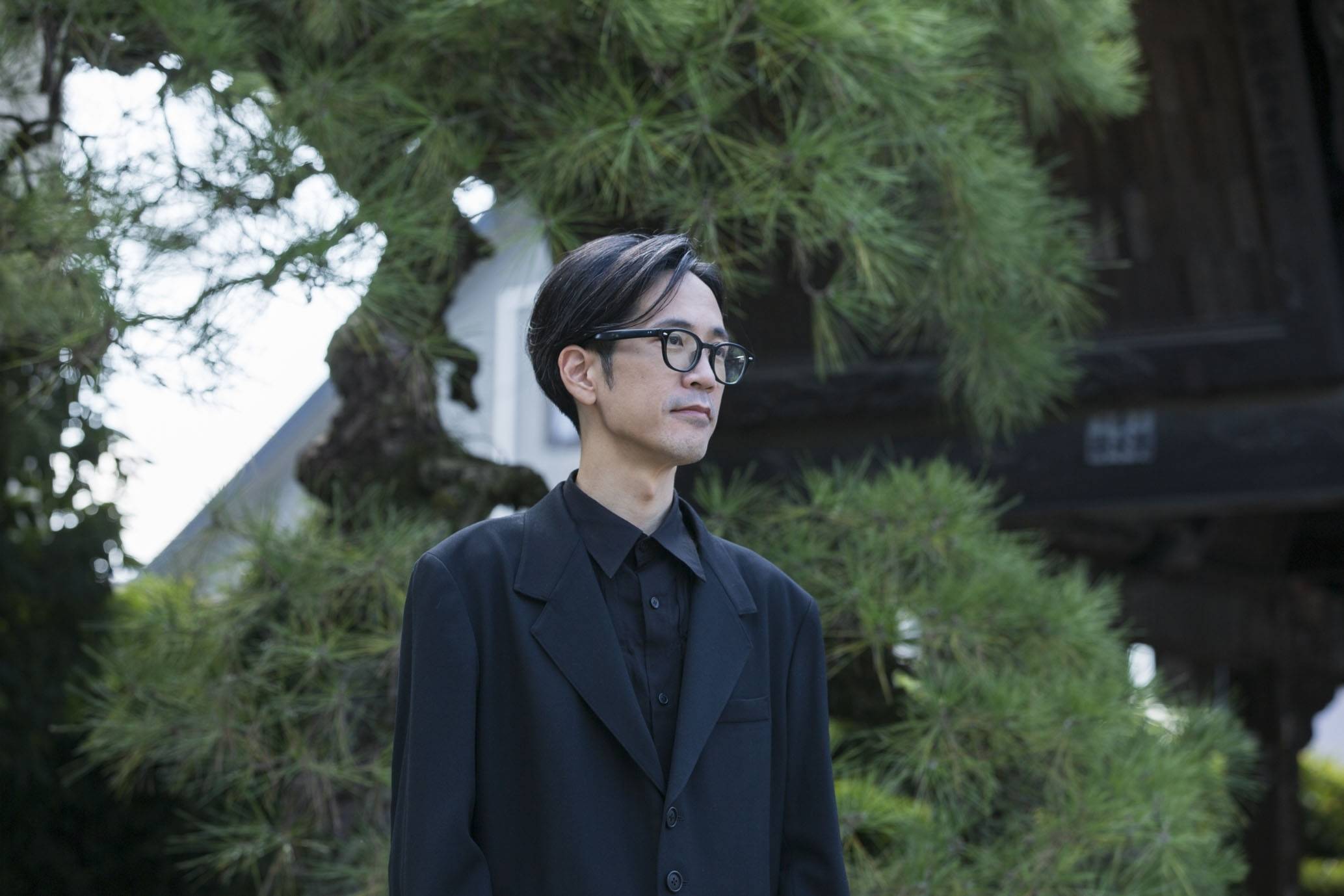
Performs An Evening of Gagaku
TARO ISHIDA 石田多朗 (Japan’s traditional Imperial Court Music)
BUSH HALL, LONDON Sunday 29 March
I keep thinking about something Taro Ishida said about gagaku, Japan’s 1,300-year-old court music. He described it as less like hearing music and more like stepping into an environment. That distinction matters more than it first appears.
On 29 March at Bush Hall in London, Ishida will perform gagaku alongside a three-piece string section and four traditional musicians. The timing marks the anniversary of Ryuichi Sakamoto’s death, the composer who first encouraged Ishida to pursue gagaku. Ishida was nominated for a Grammy for the Shōgun soundtrack, but this performance represents something different. It’s gagaku as it has existed since the 8th century, unchanged.
The Philosophy That Breaks Every Rule
Gagaku operates on principles that contradict nearly everything we understand about ensemble performance. In Western orchestral music, precision defines excellence. Everyone follows the conductor. Synchronisation is the goal.
Every musician in a gagaku ensemble attempts to delay their timing. Not by accident. By design. The goal is to avoid playing in sync whilst still performing the same melody. Each instrument interprets the piece through its own breath, its own rhythm. Musicians adjust by sensing each other, watching, listening, responding. There’s no single leader. It functions like an ecosystem where balance emerges through coexistence rather than command.
The effect is disorienting at first. Many first-time listeners report losing their sense of time. If Western music controls time, gagaku lets time drift.
What 10Hz Changes
Modern music typically uses A = 440 Hz as standard. Gagaku uses A = 430 Hz. The pitch sits slightly lower, creating a deeper, calmer sonic texture. This originates from gagaku’s own historical system, developed centuries before Western standardisation existed.
The instruments embody this alternative logic. Take the shō, which Hanako Nakamura will perform. It’s shaped like a phoenix with outstretched wings, held in a prayer-like posture. The instrument produces sound both when exhaling and inhaling, creating continuous harmonic texture. Its 17 bamboo pipes aren’t arranged logically like piano keys. The layout reflects symbolic meaning rather than ergonomic efficiency.
When Noise Is Essential
Yoshiyuki Izaki will play the ryūteki, a flute whose sound represents dragons ascending between heaven and earth. Unlike Western flutes, the ryūteki deliberately includes strong breath noise in its tone. Half the sound is pitch. Half is breath. In Western classical training, that breath noise would be considered poor technique. In gagaku, noise is essential. It imitates wind. It merges the human with the natural world.
The hichiriki, which Hitomi Nakamura will perform, produces a haunting sound. It’s a double-reed instrument classified as one of the ‘sacred’ instruments. Its timbre carries the primary melody whilst the shō creates harmonic clouds around it. These aren’t aesthetic choices. They reflect a fundamental philosophy. Gagaku was created to communicate with nature, to function as a medium between the natural environment and the human world.
Why Seasons Determine What You Play
Gagaku responds to seasons through its modal system. Each mode connects to specific seasons, directions, and elements. One mode corresponds to winter, north, and water. This isn’t superstition. It’s a coherent worldview where everything exists through relationships, balance, and mutual awareness. The music doesn’t stand apart from its context. It inhabits its context.
The pieces gradually speed up through the performance and finish suddenly at a fast tempo. This relates to the Japanese concept of impermanence, the idea that everything constantly changes. When Ishida recorded gagaku outdoors at Sawanoipe in Kyoto in 2021, recording outside allowed the sound to echo off the pond’s surface, to melt into the sky. The natural acoustic space became part of the composition.
What Ancient Music Teaches
Ishida didn’t encounter gagaku until he was 35, despite receiving the highest level of music education in Japan. When he first listened, he didn’t know how to make sense of it. But the more he explored it, the more excited he became. Gagaku doesn’t reveal itself immediately. It requires a different kind of attention, a willingness to suspend familiar frameworks.
The Bush Hall performance forms part of a European tour. Gagaku was inscribed on UNESCO’s Representative List of the Intangible Cultural Heritage of Humanity in 2009. But age alone doesn’t make something relevant. What makes gagaku compelling now is what made it radical 1,300 years ago. It refuses to simplify complexity. It embraces noise as meaning. It treats time as something to inhabit rather than control.
Why This Performance Matters Now
Watching gagaku performed live reveals something recordings can’t capture. You see the musicians sensing each other, adjusting in real time, creating cohesion without synchronisation. It looks like improvisation but follows strict compositional structures. It sounds chaotic but maintains precise balance.
The string section Ishida has added, featuring Riri Tanaka on violin, Tatsuya Nanasawa on viola, and Nanami Narita on cello, creates interesting tension. Western strings meeting gagaku instruments. Two different philosophies occupying the same space. Ishida’s approach, which he calls “Animistic Music,” doesn’t blend traditions. It places them alongside each other, allowing their differences to remain visible.
Gagaku teaches that meaning doesn’t always come from explanation. That beauty doesn’t require mastery. That some things only reveal themselves when you stop trying to control them. These aren’t abstract principles. They’re embedded in every performance choice, every instrumental technique, every structural decision.
The challenge isn’t about making gagaku accessible. It’s about creating space for a fundamentally different experience of what music can be. You can’t listen to gagaku the way you listen to a symphony. Ishida describes this as stepping into an environment rather than hearing music. That framing suggests a different kind of attention, one less focused on following melody and more attuned to texture, space, duration.
Gagaku synthesised musical cultures that travelled the Silk Road through Korea and China, mixing with Japan’s indigenous songs. By the mid-Heian period, around the 8th century, it had reached its completed form. That was nearly 1,000 years before Bach. It’s remained unchanged since.
The Bush Hall concert happens at a moment when most music prioritises immediacy. Algorithmic playlists optimise for engagement. Production techniques compress dynamic range. Attention spans shrink. Gagaku offers the opposite. It demands patience. It unfolds slowly. It requires you to adjust your expectations rather than adjusting itself to meet you.
That’s not nostalgia. It’s a living demonstration that other approaches remain possible. That music can function as environment rather than entertainment. That synchronisation isn’t the only path to coherence. Experiencing gagaku in its traditional form, performed live by musicians who’ve dedicated years to mastering these instruments, creates a different kind of encounter.
You hear the breath in the ryūteki. You feel the harmonic clusters of the shō filling the room. You notice how the hichiriki’s melody floats above whilst the gakubiwa’s plucked notes punctuate below. You lose track of time not because you’re bored but because the music operates on a different temporal logic.
What does it mean to preserve something for 1,300 years without changing it? What kind of cultural commitment does that require? These aren’t rhetorical questions. They’re what makes the Bush Hall performance worth attending. Not to witness a museum piece, but to experience music that challenges every assumption about what ensemble performance should be.